Chapter 1: THE DAUGHTER THEY DIDN’T THINK WAS WORTH SAVING
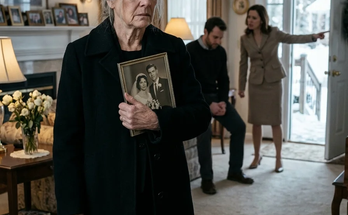
My parents walked away from me when I was thirteen years old because they decided my cancer treatment wasn’t worth sacrificing my older sister’s future.
Fifteen years later, they showed up at my military graduation, smiling for photographs and telling strangers how proud they were of the daughter they had raised.
They still believed I was the same ordinary little girl they had once called a disappointment.
They had no idea I was about to graduate first in my class from one of America’s most respected military officer-training programs.
And they certainly weren’t prepared for the moment the commanding general called my name.
Because the last name he announced wasn’t Barrett.
It was Morgan.
The name of the woman who had chosen me when they walked away.
But that wasn’t the only surprise waiting for them that afternoon.
Not even close.
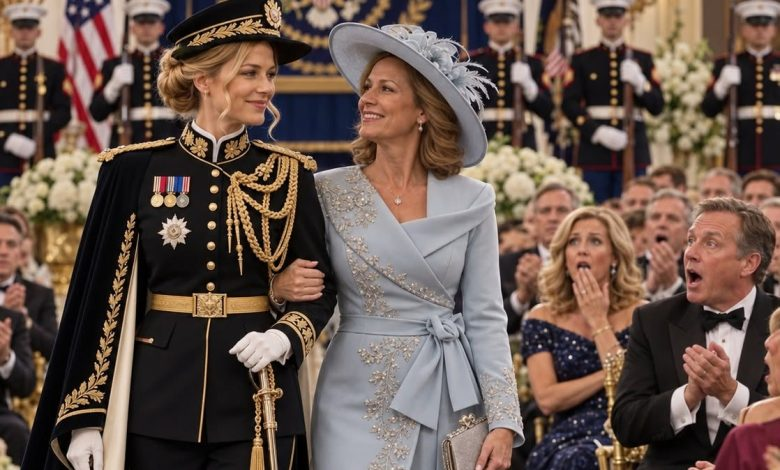
The graduation auditorium at Fort Benning, Georgia, looked almost unreal beneath the afternoon sunlight.
American flags stood along the walls. Polished brass fixtures reflected the overhead lights, and the ceremonial banners hanging above the stage displayed the history of generations of military officers who had come before us.
Hundreds of officer candidates sat in carefully arranged rows.
Our uniforms were pressed. Our shoes were polished. Our shoulders were square.
And despite the excitement filling the room, we sat with the discipline we had spent months learning.
My commission folder rested across my lap.
I ran my thumb along its edge, feeling the texture of the cover.
I had imagined this moment so many times.
During exhausting early-morning runs.
During nights when studying seemed endless.
During training exercises that pushed me further than I thought I could go.
And during the quieter moments, when I sometimes wondered whether the frightened thirteen-year-old girl I used to be would recognize the woman I had become.
I was twenty-eight now.
Healthy.
Strong.
About to become an officer in the United States Army.
Everything my younger self had once been told she would never amount to.
Three rows behind me sat three people who had played almost no part in making any of it possible.
Linda Barrett.
Richard Barrett.
And their oldest daughter, Allison.
My biological family.
I hadn’t invited them.
They had learned about the graduation through a public announcement and arrived that morning acting as though the years between us had somehow disappeared.
I had noticed them when we entered the auditorium.
Linda wore a cream-colored dress and a pearl necklace I recognized from my childhood.
Richard had chosen a navy suit and a striped tie.
Allison, now thirty-one, sat beside them in a tailored blue dress, holding her phone as though she were preparing to document an important family celebration.
Linda leaned toward the woman seated beside her.
“That’s our Hannah,” she said proudly.
I recognized her voice immediately.
There are some sounds the human mind never forgets.
The squeak of a hospital cart.
The steady rhythm of a heart monitor.
And the voice of the woman who once decided your life wasn’t worth the inconvenience of saving.
The other parent smiled.
“You must be incredibly proud.”
“Oh, we are,” Linda answered. “She’s always been determined.”
I almost laughed.
Determined.
It was such a strange word to hear from her.
At thirteen, she’d called me average.
At twenty-eight, apparently, I had become determined.
All it had taken was fifteen years and a military uniform.
Then Linda lowered her voice.
“After everything, she owes us this moment.”
My fingers tightened around the folder.
There it was.
The same way of thinking that had followed me through childhood.
Everything was a transaction.
Every kindness came with conditions.
Every achievement belonged to the people who believed they deserved credit for it.
Even when they had contributed nothing.
I kept my eyes on the stage.
I had promised myself that nothing would ruin this day.
Not Linda.
Not Richard.
Not even the memories that had started pressing against my chest the moment I saw them.
But sitting there, listening to my biological mother claim ownership of the life I had built without her, I found myself thinking about the last time I had heard her speak with that same certainty.
I was thirteen.
I was sitting in Room 314 at St. Anne’s Medical Center.
And a doctor was explaining that I had cancer.
I remember the room more clearly than almost anything else from that year.
The pale blue walls.
The narrow window overlooking the hospital parking lot.
The television mounted in the corner.
The paper cup of water sitting untouched beside my bed.
It had been raining that morning.
I watched drops gather on the glass while Dr. Michael Grant spoke to my parents.
He was a kind man with silver-framed glasses and a habit of explaining complicated things in simple language.
He had treated children for years.
He knew when to be gentle.
And he knew when to tell the truth.
“Hannah has acute lymphoblastic leukemia,” he said.
I didn’t understand every word.
But I understood enough.
I had heard the word leukemia before.
I knew it meant something serious.
Something frightening.
Something that made adults lower their voices.
Dr. Grant pulled a chair closer.
“The encouraging news is that this condition often responds well to treatment, especially in children Hannah’s age.”
He explained chemotherapy.
He explained the appointments, medications, blood tests, and careful monitoring that would become part of my life.
He explained that treatment could take years.
Then he said something I held onto with everything I had.
“With appropriate care, Hannah has a strong chance of recovery.”
I looked at my mother.
I wanted her to take my hand.
I wanted her to tell me we would get through it.
I wanted my father to put his arm around my shoulders the way he had done when I was little and thunderstorms frightened me.
Instead, Richard asked a question.
“How much is this going to cost?”
Dr. Grant paused.
“That depends on her treatment plan and several other factors. Our financial counselors can review insurance coverage, assistance programs, and the expenses that may remain.”
Richard leaned back.
“And how long are we talking about?”
“Treatment may continue for several years.”
My father let out a slow breath.
“Several years.”
Linda looked down at her purse.
Neither of them looked at me.
Dr. Grant continued speaking.
He mentioned financial assistance and support programs available to families.
But Richard interrupted.
“So we’re supposed to put everything we’ve built at risk because Hannah got sick?”
The room became painfully quiet.
I remember staring at him.
Waiting for him to smile.
Waiting for him to explain that he hadn’t meant it the way it sounded.
He didn’t.
My parents had spent years saving money for Allison’s education.
One hundred and eighty thousand dollars.
That number came up often in our house.
It was mentioned at family dinners.
During conversations about college.
Whenever Allison received another award or earned another impressive grade.
My sister was sixteen then.
She was beautiful, intelligent, popular, and determined to attend an elite university.
She had a bedroom full of academic certificates.
My parents had already begun talking about the internships she would eventually complete, the companies that would compete to hire her, and the successful life they were certain she would lead.
They treated her future like an investment that had to be protected.
Mine was something they had never bothered to calculate.
“We’re not wiping out Allison’s future over this,” Richard said.
Dr. Grant straightened.
“Mr. Barrett, we’re discussing your younger daughter’s medical treatment.”
“I understand that.”
“Then I need you to understand something equally important. Hannah has a very real opportunity to recover.”
Richard turned toward me.
His expression wasn’t angry.
That might have made it easier to understand.
Instead, he looked almost practical.
Like he was evaluating a business proposal.
“Allison has potential,” he said. “She’s going somewhere. You’ve always been average, Hannah.”
I felt something inside me become completely still.
I had heard him call me average before.
When Allison won the science fair and I received an ordinary report card.
When she made the debate team and I didn’t make the volleyball team.
When she was invited to a summer leadership program and I spent the summer working on puzzles at the kitchen table.
Average had always been a word in our house.
But until that moment, I hadn’t realized how much power my father had given it.
“We are not sacrificing a promising future for an average one,” he said.
My mother nodded faintly.
And somehow, that small movement hurt more than anything.
I looked at her.
“I’m your daughter too,” I whispered.
Linda closed her eyes.
“Hannah, please don’t make this harder.”
I couldn’t speak.
What was I supposed to say?
That I would try harder?
That I would get better grades?
That I would become someone important if they would only give me the chance?
I was thirteen years old.
I was frightened.
And suddenly I felt as though I had to prove I deserved the opportunity to grow up.
Dr. Grant stood.
His voice was calm, but something had changed in it.
“Mr. and Mrs. Barrett, I’d like you to step outside.”
Richard frowned.
“We’re her parents.”
“Then I suggest you remember what that means.”
My father stood so quickly his chair scraped against the floor.
Linda gathered her purse.
For one second, she glanced toward my bed.
I lifted my hand without thinking.
She looked away.
Neither parent hugged me.
Neither promised to come back.
They simply left.
The door closed behind them.
And the room felt larger than it had a moment earlier.
Dr. Grant stayed with me.
He called the hospital social worker.
He explained that there were people who would help arrange my care and make sure I wasn’t left to face my illness alone.
I nodded because I didn’t know what else to do.
But I wasn’t really listening.
I kept looking at the door.
Waiting.
Even then, some part of me believed my mother would return.
Maybe she would realize how frightened I was.
Maybe my father would apologize.
Maybe they would tell me the entire conversation had been a terrible mistake.
But the hours passed.
Then evening came.
And neither of them returned.
Cancer terrified me.
But the illness wasn’t the thing that broke my heart that day.
It was discovering that my parents had put a price on my chance to live and decided I wasn’t worth the sacrifice.
I was still staring at the door when someone knocked gently.
A woman stood in the doorway holding a folded blanket.
She had dark curls pulled into a loose ponytail, tired brown eyes, and worn sneakers beneath her blue nursing scrubs.
Her name was Rachel Morgan.
She was thirty-four years old.
And I didn’t know it yet, but she was about to change the entire direction of my life.