I thought staying quiet would keep my parents from taking Grandpa’s house. I was wrong about what the quiet was for.
The morning after we buried him, a moving truck pulled up at 10:16. I know the time because I had just checked my phone to see if the funeral home had called about the flowers. My parents got out first. My sister Brianna came around the passenger side wearing huge sunglasses, even though it was cloudy.
I was still in Grandpa’s old flannel shirt. I’d slept maybe three hours, and my coffee had gone cold in my hand.
Brianna looked up at the house. “I’m taking the master bedroom.”
Mom came up the walk and put two black garbage bags in my arms.
“Pack your things, Emily,” she said. “You were Grandpa’s responsibility. He’s gone now, so this house belongs to us.”
I didn’t drop the bags. I didn’t answer her, either.
I had been waiting seventeen years for my parents to come back. I just hadn’t thought they’d bring a moving truck.
I was five when they left me with Grandpa. I remember Dad saying they’d be gone for the weekend. I remember Mom kissing the top of my head without putting down her purse. Then I remember Grandpa standing by the screen door as their car went down the road.
The weekend ended. They didn’t come back.
I was too young to know what abandonment meant. I knew there were no birthday calls. I knew other kids had parents at school events.
I knew Grandpa kept saying, “They’ll call,” before he stopped saying it.
There wasn’t some big explanation. No family emergency, no dramatic fight. They were young, they had problems, and they decided that raising me was one more problem they couldn’t manage. Grandpa never made me hate them. He also never made excuses for them.
He raised me on his pension, a garden behind the garage, and whatever secondhand furniture he could fix. He took me to the library on Saturdays. When I had a fever, he sat beside my bed with a glass of water and a dish towel he kept wetting in the bathroom sink.
I was grown before I figured out how much of his life had been rearranged around me.
My parents sent a few cards over the years. One came when I was ten, with a birthday check for twenty dollars and no note. At sixteen, I called the number on an old Christmas card.
Dad answered, heard who I was, and said, “I can’t talk right now.” I waited for him to call back.
He didn’t.
That was my own bad call, I guess. I kept a little hope alive because it was easier than admitting I was the only one doing the waiting.
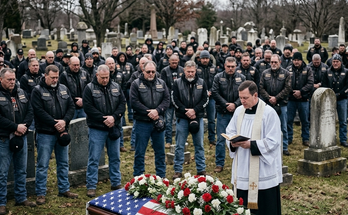
The funeral was small. Grandpa had asked for it to be simple, and I tried to do what he wanted. A few neighbors came, along with Mr. Harrison, his attorney, and Mrs. Collins, who had handled his bills and accounts for years. My parents didn’t come. I had not expected them to.
The black wreath was still on the front door the next morning. A couple of the lilies inside had started to smell sweet and sour at the same time. I was standing there with my coffee when Mom said I looked terrible.
“Thanks,” I said.
She glanced toward the truck. “We have a lot to do.”
Dad didn’t hug me. He didn’t say he was sorry about Grandpa.
He looked at the two men from the moving company and pointed toward the upstairs.
“Start with the big furniture.”
Brianna walked past me into the house. “This place smells like an old man.”
She was right, in a way. There was pipe tobacco in the coats by the back door, even though Grandpa had quit smoking ten years earlier. There was also the smell of coffee and lemon cleaner and the wood polish he used on the dining table. I knew those smells well enough that I felt mad hearing her talk about them like they were stains.
Mom snapped her fingers near my face.
“Are you listening?”
Then she put the bags in my arms. They were empty. I looked down at them, then back at her.
“Your clothes, your toothbrush, that old quilt. Whatever you need.”
Dad had come in behind her. “Don’t make this harder than it needs to be.”
I wanted to tell him that he had missed every birthday and every school concert and most of my life, so he didn’t get to decide what was hard for me. Instead, I set the bags down on the floor.
I did not want to give them a scene. I wanted to see what Grandpa had been talking about.
A few days before he died, I was sitting beside his hospital bed. I’d been coming in after my shifts at the hospital, still wearing my blue scrub top, with the smell of hand soap on my hands. He was tired that night. His voice was thin, but it was clear.
“When they come back, don’t fight with them at the door,” he said.
I thought the medication was making him mixed up. “Who’s coming back?”
“Your parents.”
I remember rubbing the blanket between my fingers. It had a little loose thread near the edge. I kept winding it around my thumb.
“Why would they come back now?”
He looked at me for a long second. “Let them inside.”
“They left me here.”
“I know.”
“They don’t get to come back and take the house.”
“I know that too.”
I was waiting for him to say what he meant. He didn’t. He only squeezed my hand.
“Let them talk,” he said. “Then open my study.”
I asked him what was in there.
“Everything you need.”
That was all he gave me. I kept asking, but he was done talking. I can still hear the oxygen machine clicking by the bed. It was a little off beat, like a monitor that needed to be checked.
At the house, I did what he’d told me. I stayed calm. I let Dad tell the movers where to go. I let Brianna walk around the upstairs and choose a room that wasn’t hers. I listened while Mom talked about the cost of the roof and the property taxes, as if she had been paying them.
She hadn’t.
Grandpa had covered the bills. I knew because I helped him sort them when he stopped driving. The property tax statement came every year in a thin white envelope with the town’s name printed at the top. He always paid it before the due date. The money came from his account, not my parents’.
I could have said that. I didn’t. I was holding on to Grandpa’s instruction, and, if I’m honest, I wanted them to keep showing me who they were.
That’s not my best quality. I’ve always had a stubborn streak. I can get quiet and call it being sensible when I’m really waiting for someone to say one more thing I can’t forgive.
Mom looked around the foyer. “We’ll have to get rid of half this stuff.”
Dad said, “We can put the good pieces in storage.”
Brianna called from upstairs. “Mom, can I paint the master bedroom?”
“Sure,” Mom called back. “We’ll make it look like a real house.”
I saw a mover stop with one hand on Grandpa’s bedroom dresser. He looked at me. I gave him a small shake of my head. He let go.
That was when Dad finally turned to me.
“Your grandfather wanted this property to stay in the family.”
I looked at him. “You mean with you?”
He shifted his weight. “I mean the family.”
The word sat there between us. He’d used it like a key. I’d heard it enough as a kid to know what it could unlock for everyone except me.
The study door clicked.
Nobody had touched it. It was down the hall, shut the way Grandpa always left it. Mom turned first. Dad stopped talking. Brianna came halfway down the stairs, holding her phone.
The door opened from the inside.
Mr. Harrison stood there in a charcoal suit. Mrs. Collins was just behind him, holding a folder. I’d met them in that room before, usually when Grandpa needed help with paperwork and didn’t want me worrying about it.
Mr. Harrison glanced at the bags on the floor.
“Emily,” he said, “I see your parents have arrived.”
Mom’s hands came up. “What is this? Why are you in my father’s house?”
“It isn’t your house,” Mr. Harrison said.
Mom made a short laugh. “Excuse me?”
Mrs. Collins looked at me, not my mother. “We’re here because your grandfather asked us to be.”
Dad came a few steps closer. “I’m his son.”
“Yes,” Mr. Harrison said. “You are.”
My mother stared at him. “Then you know we’re entitled to the house.”
“I know you believe that.”
That was when the bags slipped out of her hands. They hit the floor with a soft, empty thump. I had been waiting for a loud sound. There wasn’t one.
Brianna came farther down the stairs. “What’s going on?”
Dad looked at me. “Did you know about this?”
“No.”
That was true. I knew Grandpa had told me to open the study. I didn’t know what was inside.
Mr. Harrison opened the door wider. “Emily, would you come in?”
Mom started after me.
“I’m afraid you’ll need to wait out here,” he said.
“I’m her mother.”
“I understand.”
“She’s my daughter.”
“I understand that too.”
I went into the study. I could feel all of them watching me, but I didn’t turn around. The room smelled like tobacco, old paper, and the peppermint candies Grandpa kept in a glass dish. He had stopped smoking years ago. That smell still clung to his brown jacket hanging behind the door.
There was a folder on the desk. Beside it sat a small picture of me at five, in a yellow raincoat, with Grandpa’s hand resting on my shoulder. I don’t remember the picture being taken. I remember the raincoat. The sleeves were too long and one cuff had a dark spot where I’d rubbed it against the fence.
Mr. Harrison pointed to the folder.
“Your grandfather wanted me to explain this in person.”
I opened it. The first paper was a recorded deed. My name was typed on it. I read it once, then again, because the wording sounded like it belonged to someone else.
“What is this?”
“Your grandfather transferred the house to you four years ago,” he said. “He kept the right to live here for the rest of his life. That right ended when he died.”
I looked at the date. I had been eighteen.
“So it’s mine?”
“Yes.”
I kept looking at the page. My name was there. The house address was there. The county stamp was there. It wasn’t a note in Grandpa’s handwriting or a wish he’d left in a drawer. It was a recorded deed.
Mrs. Collins said, “He paid the taxes and handled the upkeep while he lived here. The property passed to you when his life estate ended.”
I felt a little stupid for asking, but I did it anyway. “My parents can’t claim it?”
“No,” Mr. Harrison said. “They have no ownership interest in the property.”
I touched the county seal with my thumb. It was raised on the paper. I had seen the same stamp on documents Grandpa kept in a blue folder in his desk, though I never knew what they were.
“Why didn’t he tell me?”
Mr. Harrison lowered his voice. “He wanted you to know when you were ready to manage it. He also thought you might feel differently about your parents if you weren’t waiting for an inheritance.”
That landed badly. I didn’t want to admit it, but part of me wished Grandpa had told me sooner. I could have asked him why. I could have told him that the house was never the reason I hoped my parents would call.
I was also ashamed that my first feeling was relief about the house. Not grief. Not love. Relief that I wouldn’t have to pack my life into two bags because my mother said so.
I closed the folder. “What happens now?”
“Now,” Mr. Harrison said, “you decide what you want to do. The deed is already recorded. There’s nothing for your parents to sign.”
Mrs. Collins put another paper on the desk. She explained that Grandpa had left instructions about the rest of his estate, but I barely heard her. The important part was simple. The house was mine. Grandpa had made sure of that years ago.
Mom’s voice carried from the hall. “This is ridiculous.”
Mr. Harrison opened the door enough to speak to her. “I can show you the recorded deed.”
“You’re telling me my own father gave the house away behind my back?”
“He gave it to Emily.”
“She was a child.”
“She was eighteen.”
Dad said, “We need to talk about this like adults.”
I stepped into the hall with the folder in my hands.
“I’m here,” I said.
Mom turned toward me. “You knew.”
“I just found out.”
“You were in on it.”
“I wasn’t.”
Her mouth tightened. She looked at my old flannel shirt and the bags on the floor, like she could still make me small enough to move out of her way.
Dad stepped between us, not quite blocking Mom, but close. “Emily, this doesn’t have to get ugly.”
“You brought a moving truck the day after Grandpa’s funeral.”
“We thought there was a plan.”
“You thought the house was yours.”
Dad rubbed one hand over his chin. His face looked tired, and for a second I saw the man who used to sit at the kitchen table when I was little and peel oranges in one long strip. I almost felt sorry for him. Then I remembered the birthday call I’d waited for.
“We’ve had a rough few years,” he said. “The rent went up. I lost work.”
Mom spoke over him. “We need somewhere stable.”
That was the first thing she said that sounded like the truth.
I looked at her. “You could have called.”
“We didn’t know what to say.”
“You could have said that.”
She crossed her arms. “We’re here now.”
“You’re here for the house.”
“We’re family.”
I heard the phrase again. I looked down at the bags by her feet. One had a hole near the bottom. I remembered Grandpa using them to haul leaves to the curb. He had always kept them folded under the sink.
“Family doesn’t show up with movers before they ask if I’m okay.”
Mom didn’t answer. Dad did.
“We didn’t think you’d be using all this space by yourself.”
I laughed once, not because it was funny. “I live here.”
Brianna had come down the rest of the stairs. She was looking at the folder.
“So the house is hers?” she asked.
“Yes,” Mr. Harrison said.
“But Grandpa said it should stay in the family.”
“He transferred it to Emily.”
Brianna looked at Mom. “You said we were moving in.”
Mom snapped, “I thought I knew what I was doing.”
That was a small thing, but it changed the room. Brianna looked embarrassed. Dad looked angry. Mom looked at me as if I had set them all up, when all I had done was stand where Grandpa had left me.
I wish I could say I felt strong. I didn’t. My hands were shaking enough that the folder made a little tapping sound against my leg. I was trying to keep my voice steady because I’ve seen people get louder when they think the other person is about to break.
“Take the furniture you brought,” I said. “Leave Grandpa’s things.”
Dad’s eyes moved to the movers. “They’ve already unloaded the truck.”
“Then load it back.”
Mom made a hurt sound. “You’d really throw us out?”
“You came in and called me a burden.”
“I was upset.”
“So was I.”
It was the first time I’d said that to her. It didn’t sound like much. It was enough.
Mr. Harrison offered to call the moving company manager and make sure the crew only took what my parents had brought. Mrs. Collins stayed with me while the movers carried the dresser back down the stairs. It took longer than it should have because nobody had planned for unloading a house and then undoing it.
Brianna walked out first. She took her sunglasses off and rubbed the bridge of her nose.
“I didn’t know you were still living here,” she said.
I looked at her. “You didn’t ask.”
She nodded once, like I’d given her a fair answer. “No. I didn’t.”
There wasn’t anything else to say.
Mom stayed in the foyer while Dad helped direct the movers. She looked at the old coat hooks, the worn rug by the door, the little crack in the trim Grandpa had meant to fix for years. She had seen this house before. She had held me in it when I was a baby. I wondered if she remembered any of that.
She came close enough for me to smell the perfume she used to wear when she visited once or twice, a long time ago.
“I didn’t think you’d want to be alone in that big house,” she said.
“I’ve been here a long time.”
“You could have told us you wanted it.”
I almost said, “I didn’t know it was mine.” I didn’t. It wouldn’t have helped.
“I wanted you to come back before now.”
She looked down. Her mouth opened, then closed.
“I’m sorry,” she said.
I had wanted to hear it for years. I had pictured the words so many times that I used to think hearing them would do something. It didn’t erase the years. It didn’t make me want to hug her. It was still the first honest thing she’d said that morning.
Dad called from the porch. “We’re ready.”
Mom didn’t move right away. I didn’t reach for her.
She looked at the folder in my hands. “Your grandfather really did this?”
“He did.”
“Why?”
I thought about the question. “He wanted me to have a home.”
She nodded, but her eyes stayed on the paper. I couldn’t tell if she was ashamed or just thinking about what she’d lost. Maybe both.
The truck pulled away at 12:42. Dad drove behind it. Brianna was in the front passenger seat, looking down at her phone. Mom sat in the back. She didn’t look out the window as they left.
There was no shouting. No police. No grand speech. I stood on the porch until they were gone, then went back inside and shut the door.
The movers had left a long scrape near the stairs. I ran my finger over it, then got a damp cloth. It didn’t come out. Grandpa had shown me how to fix marks like that, but this one needed sanding.
I sat down in the kitchen. The coffee was still on the counter, cold and bitter. I drank some anyway because I didn’t feel like making more.
Mr. Harrison went through the papers with me. The deed was all I needed for the house. Grandpa’s other instructions were in the will, which left his savings and personal things to me. He had not left money for my parents or Brianna. I didn’t ask if he’d thought about changing that. I knew him well enough to know he had thought about everything.
Mrs. Collins asked whether I wanted them to stay while I called the town office and changed the mailing address for the tax bill.
“I can do it,” I said.
She didn’t push. “All right. Call if you need help.”
They left the folder with me and went out through the front door. The black wreath was still there. I took it down and put it beside the garbage bags.
For a while, I kept waiting for the phone to ring. I knew that was silly. I checked it anyway. At 2:08, I had no missed calls.
That evening, Mom sent a text: We need time to talk about this.
I read it twice. I didn’t answer. The next day, Dad called once. I let it go to voicemail. He said he wanted to work things out and that he was sorry the morning got so bad.
I didn’t call back that night. I didn’t call the next day, either.
I’m not proud of how easy it was to let the phone sit there. I’d spent years imagining that if they came back, I’d ask every question I had saved up. Instead, when they were finally close enough to answer, I didn’t know if I wanted to hear them.
The house was mine. That part was settled. The other part wasn’t.
I kept the study mostly as it was. I put the folder in the top drawer of Grandpa’s desk, then took it out again because I didn’t want it hidden. For a few weeks, I carried the deed between the desk and the small safe Mr. Harrison helped me buy. It felt ridiculous to keep checking it. I checked anyway.
The first property tax bill arrived in my name. I opened it standing at the counter. The house was still the same house. My name was just the one printed at the top.
A month later, I took the two garbage bags out of the hall cupboard. I almost threw them away. Then I remembered Grandpa using them for leaves, so I folded them and put them back under the sink.
I don’t know whether I’ll ever be ready to talk to my parents. I know the house won’t make that decision for me. I know Grandpa didn’t buy my love with a deed, and I don’t want to pretend the paper fixed what happened when I was five.
But when I open the drawer, the deed is there, with my name stamped into the county record. The house is mine.
I’m still learning what to do with that.