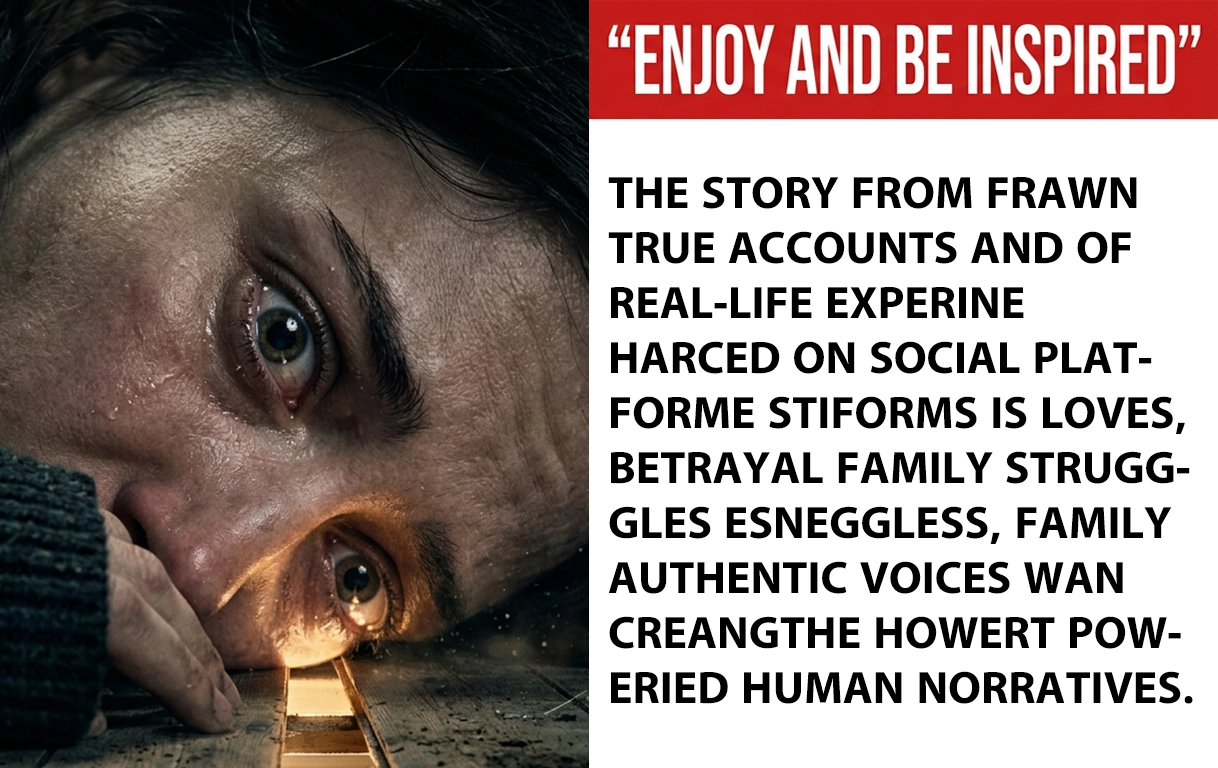
They Sold My Daughter’s Cello for $87,000 and Used the Money to Build a Luxury Pool—Then Grandma Arrived With a Lawyer and Revealed the Shocking Truth About Who Really Owned It.
Read Full Story
Part 2: The Page That Changed the Color of the Pool
My father held the document like it was hot.
His eyes moved across the text. I watched the information travel through him the way you watch a shockwave travel through a structure, first the surface, then the supports, then the foundation.
He looked at Grandma Margaret.
You cannot do this.
Grandma folded her hands.
I already have.
My mother stepped closer. She read the page over Dad’s shoulder. Her grill spatula was still in her hand, suspended at an angle, dripping sauce onto the patio like punctuation.
The document was a formal demand letter from Andrew Calloway’s firm.
It stated, in precise legal language, the following:
The antique cello sold by my parents was not their property. It had been gifted to Lucy by Margaret through a documented gift transfer, executed three years earlier, witnessed by Andrew, and filed with Margaret’s estate records.
The gift transfer included a specific clause: the instrument was to remain in Lucy’s possession until she reached the age of eighteen, at which point full ownership would transfer to her unconditionally. Until that time, the instrument was held in custodial trust, with Margaret as the trustee and me as the custodial parent.
My parents had no legal authority to sell the cello. They were not the trustees. They were not the custodial parents. They were not parties to the gift transfer. They had taken property that belonged to an eleven-year-old child, sold it to a private collector, and spent the proceeds on a home improvement project for a different grandchild’s family.
The demand letter required my parents to do two things within thirty days.
First, return the full $87,000 to a trust account established in Lucy’s name, to be used exclusively for the recovery or replacement of the instrument.
Second, provide the contact information of the collector who purchased the cello so that Andrew’s firm could initiate negotiations for its return.
If neither condition was met within the thirty-day window, Andrew would file a civil action for conversion of property, theft by deception, and breach of fiduciary duty against both of my parents.
My father set the document on the patio table beside a bowl of potato chips.
Mom, he said. This is between family.
Grandma Margaret looked at the pool.
That pool is between family, she said. Eighty-seven thousand dollars of a child’s inheritance is between family. What I am holding in this folder is between adults who understand the difference between giving and taking.
Rachel stepped forward.
Grandma, we did not know about the gift transfer. Nobody told us the cello was legally Lucy’s.
Margaret turned to Rachel.
You did not ask. You saw a valuable instrument in a room you rarely visited, and you decided it was available. Your parents agreed because they have spent your entire life confusing your wants with the family’s needs. And Lucy’s cello became your pool because nobody in this family has ever told you no.
Rachel’s green drink trembled in her hand.
That is not fair.
Margaret looked at the pool. At the children splashing. At the neighbors holding cups and pretending not to listen.
What is not fair, she said, is an eleven-year-old girl who stood in an empty room and asked her mother if she did something wrong. What is not fair is a child who practiced on a borrowed instrument because the adults in her life decided her inheritance was worth less than a hole in the ground with water in it.
She looked at my parents.
You have thirty days.
Then she turned to Lucy.
Lucy was standing beside me, still holding her folded towel, watching her great-grandmother the way children watch adults who are doing something important and doing it without raising their voice.
Grandma crossed the patio. She knelt in front of Lucy, slowly, the way eighty-one-year-old knees kneel, with effort and without complaint.
She took Lucy’s hand.
The cello was always yours, she said. It was never a loan. It was never temporary. It was yours the day I placed it in your hands, and it will be yours the day it comes back.
Lucy’s chin trembled.
What if it does not come back.
Then we will find another way to hear the music. But the cello is coming back, Lucy. Your great-great-grandmother brought it across an ocean. I am not going to let it disappear into a swimming pool.
Lucy pressed her face against Margaret’s shoulder. The towel dropped. Her small hands gripped the back of Grandma’s crisp blouse.
Margaret held her.
The pool motor hummed. The children splashed. The neighbors looked at their cups.
My parents stood on the patio holding a demand letter and the dawning understanding that the woman they had tried to keep in the dark had arrived at their party with a lawyer, a folder, and the legal documentation they had assumed did not exist.
They had assumed Margaret was sentimental. That the cello was a gesture, not a document. That a gift from a grandmother was the kind of thing families handled informally, without paperwork, without legal weight, without the particular permanence that comes from having an attorney witness the transfer and file it with the estate.
They were wrong.
Margaret was sentimental. She was also precise. She had survived enough to understand that sentiment without documentation is a wish, and wishes do not survive families like ours.
Part 3: The Thirty Days That Rearranged the Family
My parents did not return the money in the first week.
They spent the first week doing what they had always done when confronted with the consequences of their choices. They managed the narrative.
My mother called every relative who had been at the pool party and explained that Grandma Margaret was confused, that the legal letter was a misunderstanding, that the cello had been an informal gift with no real legal standing, and that Emily was overreacting the way Emily always overreacted when Lucy did not get her way.
My mother was a talented narrator. She had spent decades constructing the version of our family that she wanted the world to see, and the version she constructed was one in which she and my father were reasonable, generous people whose difficult older daughter created problems and whose accommodating younger daughter deserved everything she received.
Rachel was the protagonist of my mother’s story. I was the complication. Lucy was invisible.
Andrew Calloway disrupted the narrative on day nine.
He sent a follow-up letter, this time addressed not only to my parents but copied to their homeowner’s insurance carrier, because the pool had been constructed using funds derived from the unauthorized sale of a minor’s property and the insurance policy covering the pool might be affected by the pending legal claim.
My parents called Andrew’s office within the hour.
The insurance carrier called the next day.
Suddenly the narrative my mother had been constructing, the one about a confused grandmother and an overreacting daughter, had a second audience. An audience that did not operate on family loyalty or emotional history. An audience that operated on liability.
My father retained an attorney on day eleven.
His attorney reviewed the gift transfer document, the estate filing, and Andrew’s demand letter. He called Andrew’s office and requested a meeting.
The meeting took place on day fourteen.
I was not present. Andrew represented Margaret and Lucy’s interests. My father’s attorney represented my parents. The meeting lasted ninety minutes.
Andrew told me afterward what happened.
Your father’s attorney reviewed the documentation and confirmed that the gift transfer is legally valid. The cello was Lucy’s property. Your parents had no authority to sell it. The sale constitutes conversion at minimum.
What did they say.
Your father’s position is that the sale was made in good faith, that he believed the cello was part of the household property, and that the gift transfer was never communicated to him.
Was it communicated to him.
Andrew paused.
Margaret says she told your father about the gift transfer when it was executed three years ago. She says she informed him that the cello was being placed in Lucy’s name and that it was not to be sold, moved, or repurposed.
And he says he does not remember.
He says the conversation did not occur.
Andrew looked at me.
Margaret anticipated this response. She kept a handwritten note from the conversation, dated and signed by her, in which she recorded your father’s acknowledgment that the cello belonged to Lucy. The note is in the estate file.
My father’s defense, which relied on the claim that he did not know the cello was Lucy’s, collapsed the moment Andrew produced the note.
Margaret had documented everything. Not because she was suspicious of her own son. Because Margaret had spent eighty-one years understanding that the people who take things always claim they did not know the things were not theirs, and the only defense against that claim is a piece of paper with a date and a signature.
The collector was contacted on day seventeen.
His name was William Hargrave. He specialized in antique string instruments and had purchased the cello through a private broker my father had found online.
Hargrave was cooperative. Not because he was generous. Because Andrew’s firm informed him that the sale was legally invalid, that the cello had been sold without the owner’s consent, and that continued possession of the instrument could expose him to a claim for receiving stolen property.
Hargrave agreed to return the cello in exchange for a full refund of the $87,000 purchase price.
The refund would come from my parents.
On day twenty-three, my parents agreed to the terms.
They did not have $87,000 available. The money had been spent on the pool, which was now finished, filled, and being used by Rachel’s children while the legal machinery ground through the process of undoing what it had paid for.
My parents took a home equity loan against their house to fund the refund. The loan carried interest. The interest would accumulate for years. The pool that was supposed to be a gift for Rachel’s family had become a debt that would follow my parents into their retirement.
They signed the loan documents on a Tuesday.
The cello was returned on a Thursday.
Andrew arranged the transfer through Hargrave’s broker. The instrument arrived in a climate-controlled case, inspected by a luthier Margaret had retained to verify that the cello had not been damaged during the sale, transport, or storage.
It had not been damaged.
The cello was intact. The same instrument Margaret’s mother had played in a church in Prague. The same instrument Margaret had carried to this country at nineteen. The same instrument she had placed in Lucy’s hands three years earlier and said, This belongs to you.
It was back.
Part 4: The Afternoon Lucy Played Again
I brought the cello to our apartment on a Saturday morning.
Lucy was sitting at the kitchen table eating cereal. She was wearing the oversized t-shirt she slept in and the expression she wore on weekend mornings, the drowsy, unfocused look of an eleven-year-old who has not yet committed to being fully awake and is reserving judgment about whether Saturday deserves her full attention.
I set the case on the floor beside the table.
She looked at it.
She set her spoon down.
She looked at me.
Is that.
I unlatched the case.
The cello lay inside, nested in dark velvet, the wood glowing with the particular amber warmth that antique instruments carry, the color of years and hands and the accumulated resonance of every note that has ever been played through the body of the thing.
Lucy slid off her chair. She knelt beside the case. She did not touch the cello immediately. She looked at it the way a person looks at something they believed was gone forever and are now seeing again and need a moment to reconcile the absence with the return.
She touched the neck of the instrument with two fingers.
The same two fingers she had used to touch the empty stand.
She pulled her hand back, the same motion, and then she put it back again, because this time the cello was there, and the touching was not an act of grief but an act of confirmation.
It is here, she whispered.
It is here.
She looked at me.
How.
Grandma Margaret.
Lucy pressed her hand flat against the body of the cello.
She sat with it for a long time.
That afternoon, she tuned the instrument. She sat in the corner of the living room, the same posture she held in Grandma’s music room, and she drew the bow across the strings for the first time in seven weeks.
The sound filled the apartment.
Not thin. Not boxy. Not the compressed, struggling voice of a borrowed student instrument doing its best with limited material. The full, warm, layered sound of an instrument that had been built by a craftsman over a hundred years ago and had spent the intervening century absorbing the vibrations of every hand that held it and every room that contained it.
Lucy played for forty minutes.
She played the piece she had been rehearsing on the student cello, the same notes, the same structure, but the sound was transformed. The music had returned to the instrument it was meant to live in, and the instrument remembered, the way old things remember, not with memory but with resonance, with the particular readiness of a body that has been played so many times that the playing is embedded in the wood itself.
I sat in the kitchen and listened.
I cried.
Not the controlled kind. Not the quiet, private kind I had learned to produce during the weeks when the cello was gone and Lucy practiced on a borrowed instrument and I stood in the hallway listening to a sound that was almost right but was not and could not be until the thing it needed came home.
The cello was home.
Lucy was playing.
And the sound that filled my apartment was the sound of a great-great-grandmother’s instrument played by a great-granddaughter’s hands in a room three thousand miles from Prague, connected by wood and strings and the stubborn, unbreakable insistence of a woman named Margaret who had carried this instrument across an ocean and was not going to let it disappear into a swimming pool.
Part 5: The Music Room That Belonged to Lucy
Margaret visited the following Sunday.
She arrived at the assisted living community’s visiting room in her crisp blouse, the same one she had worn to the pool party, because Margaret owned five blouses and rotated them the way she rotated everything in her life, systematically, without waste, with the understanding that quality was more important than quantity and that a well-maintained garment, like a well-maintained instrument, lasted longer than the person who purchased it.
I brought Lucy. Lucy brought the cello.
Margaret sat in the armchair by the window. Lucy set up the instrument in the center of the room, adjusted the endpin, and looked at her great-grandmother.
What should I play.
Margaret folded her hands.
Play what your great-great-grandmother played. The first piece I taught you.
Lucy positioned the bow. She closed her eyes. She breathed once.
Then she played.
The piece was a sarabande. Slow. Deliberate. The kind of music that does not announce itself but arrives gradually, the way daylight arrives, not all at once but in degrees, filling the room from the edges inward until the entire space is occupied.
Margaret listened with her eyes closed.
Her hands were still folded. Her posture was upright. She sat in the armchair the way she sat everywhere, with the composed, unwavering stillness of a woman who had been listening to this instrument for sixty-two years and who understood that the listening was not passive. It was participation. The audience completes the music the way the reader completes the book. Without the listener, the sound is just vibration. With the listener, it becomes something else.
It becomes inheritance.
Lucy played for eleven minutes. She did not make a single mistake. Not because she was perfect. Because she was present. Fully, completely, undistractedly present in the way that children are present when they are doing the thing they love most and the world outside the thing has temporarily ceased to exist.
When she finished, Margaret opened her eyes.
She did not clap. She did not praise. She simply looked at Lucy with the expression of a woman watching her own history continue through someone else’s hands and finding the continuation satisfactory.
Your great-great-grandmother would have liked that, she said.
Lucy set the bow across her knees.
Did she play this piece.
She played it every Sunday. In a church in Prague. Before the war took the church and the city took the congregation and everything that was supposed to be permanent turned out to be temporary.
Margaret looked at the cello.
But the cello survived. Because she carried it. Through the war, through the borders, through every checkpoint and train station and temporary shelter between Prague and the boat that brought her here. She carried a cello across a continent because she believed the music inside it was more important than the weight of it on her back.
She looked at Lucy.
And I carried it from the dock to the apartment to the house to the music room to your hands. Four generations, Lucy. Four women. One instrument. And not one of us let it go.
Lucy pressed her hand against the cello’s body.
Grandpa tried to sell it.
Margaret’s expression did not change.
Your grandfather tried to convert it into a swimming pool, she said. And he discovered that some things are not convertible. Some things have a weight that cannot be measured in dollars, and a history that cannot be replaced with concrete and chlorine, and a future that belongs to the person it was given to, not the person who wants it for something else.
She folded her hands again.
The pool will crack in fifteen years. The pump will fail. The concrete will settle. Your parents will sell the house and the pool will belong to someone who does not know how it was paid for.
She looked at the cello.
But that instrument will still be playing. Fifty years from now. A hundred. Your great-great-grandmother built it into the world and the world does not let go of things that were built to last.
Lucy looked at the cello. At Margaret. At me.
I am going to keep it forever, she said.
Margaret smiled. The real smile. Not the calm, strategic smile she had worn at the pool party. The smile of a woman who had just heard the only sentence she needed to hear from the only person who needed to say it.
I know you will, she said.
My parents and I did not speak for three months.
The silence was not a punishment. It was a boundary. The difference between the two is that a punishment is designed to cause pain and a boundary is designed to prevent it. I was not trying to hurt my parents. I was trying to stop them from hurting Lucy.
Rachel called once. She asked whether things could go back to normal. I told her that normal was a system in which Lucy’s belongings were treated as family resources and Rachel’s needs were treated as priorities, and that particular version of normal was not something I was interested in restoring.
She did not call again for several months.
In the spring, my mother sent a card. Not to me. To Lucy.
Inside the card was a brief note in my mother’s handwriting.
Dear Lucy, I am sorry about the cello. I made a mistake. Love, Grandma.
Lucy read the card at the kitchen table. She set it down. She looked at me.
She said sorry.
She did.
Do you think she means it.
I think she is starting to.
Lucy picked up the card. She placed it on the shelf beside the cello case, leaning against the velvet exterior, positioned where she could see it from her practice chair.
She did not throw it away. She did not hide it. She placed it in the proximity of the instrument it referenced, as though the apology and the cello needed to occupy the same space in order for the apology to become real.
Eleven years old. And she understood something about forgiveness that most adults spend decades learning.
That forgiveness is not a feeling. It is a location. It is the place where the damage and the repair exist side by side, visible, acknowledged, neither erased nor amplified, simply present.
The card sat beside the cello case for the rest of the year.
Lucy practiced every day.
The sarabande. The new pieces her teacher assigned. The scales she ran through with the grinding, repetitive dedication of a child who understood that the instrument in her hands was not just an instrument. It was four generations of women who carried something across oceans and borders and family arguments and a swimming pool and a demand letter and a thirty-day deadline, and who handed it forward every time because the handing forward was the point.
The music was the point.
And the music, unlike the pool, would never crack.
One evening in June, I sat in the kitchen while Lucy practiced in the living room. The apartment was warm. The windows were open. The sound of the cello drifted through the rooms the way all good sounds drift, without hurrying, without forcing, filling the available space the way water fills a vessel, completely and without waste.
I listened.
Margaret’s mother had played this instrument in Prague. Margaret had carried it to America. I had fought to get it back. Lucy was playing it now.
Four women. One cello. A hundred years.
The pool would crack. Margaret was right about that. Fifteen years, maybe twenty. The concrete would settle. The pump would fail. The water would drain. And the thing my parents had built with my daughter’s inheritance would become a hole in the ground, empty, expensive to fill, and impossible to explain to the neighbors.
But the cello would still be playing.
Somewhere. In some room. In some pair of hands connected to mine by blood and wood and the particular, stubborn refusal of a family of women who carried things across the world and never once let go.
Lucy finished the piece.
She set the bow across her knees.
Mom, she called.
Yeah.
Can I play one more.
You can play as many as you want.
She lifted the bow.
She played.
And the sound filled the apartment the way inheritance fills a life, not all at once but in degrees, arriving from somewhere old and traveling toward somewhere new, carried by hands that were eleven years old and already strong enough to hold a hundred years of music and a great-grandmother’s promise and the particular, permanent, unbreakable truth that some things are not for sale.
Not for a pool. Not for a family. Not for eighty-seven thousand dollars.
Some things are kept.
Lucy was keeping this one.