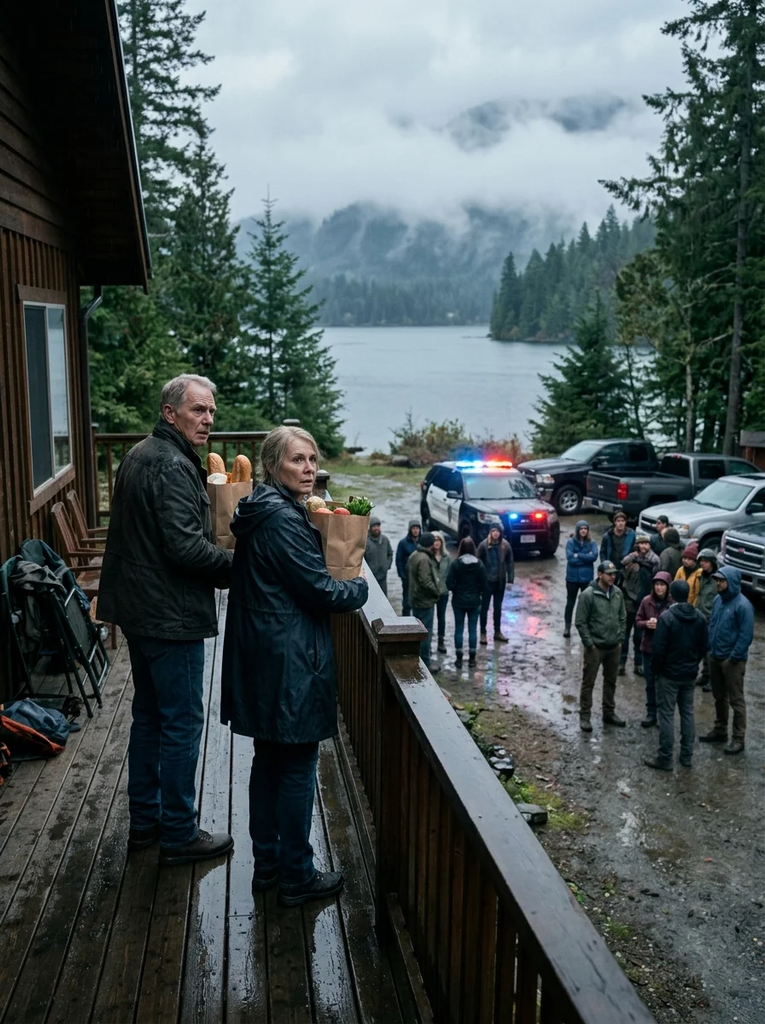
“My parents announced they were bringing
“My parents announced they were bringing
20 guests to my lake house
and told me to fill the fridge.
When I said no, Mom laughed
and asked if I really thought
I could stop them.
By Friday morning, Dad was shouting,
“What did you do to the house?”
I had just finished
a twelve-hour shift
at St. Mercy Medical Center,
most of it on my feet,
most of it spent watching people
fight for one more breath
beneath fluorescent lights.
By the time I parked
outside my apartment
in Portland, Oregon,
my scrubs smelled like antiseptic
and stale coffee,
and my phone had been buzzing
for nearly twenty minutes.
Family group chat.
Dad had tagged me three times.
Dad: We’re using your lake house
this weekend. 20 guests.
Mom: Fill the fridge and behave.
My younger brother, Kyle,
added a row of laughing faces.
I stared at the messages
until the words blurred.
My lake house was not “family property.”
It was mine.
I bought it
after six years of double shifts,
overtime, and living with roommates
who stole my food.
A quiet place near Devils Lake
where I could sleep, breathe,
and not hear my mother criticize
every part of my life.
I typed one word.
Me: No.
Mom replied almost instantly.
Mom: You really think
you can stop us?
Dad sent a voice message,
but I did not play it.
I already knew the tone:
an order dressed up
as family love.
So I did not argue.
I showered, changed clothes,
and made one call
to my neighbor, Mrs. Harper,
who lived across the gravel road
from the lake house.
“Margaret,” I said,
“if any cars show up this weekend,
they do not have permission to enter.”
She paused.
“Your parents again?”
“Yes.”
“Good,” she said.
“I’ll keep watch.”
Then I opened my laptop
and logged into
the smart security system.
I changed every door code.
I disabled the old garage keypad.
I shut off the guest Wi-Fi.
I activated the cameras
and called the local locksmith,
the same man who had helped me
after my father “borrowed” the place
last summer
and left beer cans
in the hot tub.
By noon, the locks were changed.
By three, I had emailed
the sheriff’s office non-emergency line
with a written statement:
no one had permission
to enter the property.
Then I slept.
Friday morning, my phone exploded.
Forty missed calls.
Dad’s name filled the screen
again and again.
I answered on the forty-first.
“What did you do to the house?”
he screamed.
His voice was windy and furious.
In the background, Mom yelled,
“Tell her to stop acting crazy!”
I sat up slowly.
“Good morning.”
“Don’t you good morning me!
The front door code doesn’t work.
The garage is locked.
There are cameras everywhere.
Your mother is standing outside
with groceries melting,
and everyone is staring at us!”
“Then everyone should leave.”
“This is a family weekend!”
“No,” I said.
“It was an attempted break-in
with witnesses.”
For once, he went silent.
Then Dad lowered his voice.
“Open the door, Claire.”
I looked at the live camera feed.
Twenty people stood crowded
on my porch.
And behind them,
a sheriff’s cruiser
was turning into the driveway…
The cruiser stopped behind Dad’s truck.
Red gravel dust drifted
through the morning light.
Dad turned toward it.
His shoulders lost
some of their certainty.
Deputy Ruiz stepped outside.
I recognized him
from the photograph
beneath my emailed statement.
He was broad-shouldered,
calm,
and entirely unimpressed
by the crowd.
Mrs. Harper emerged behind him.
She carried her walking stick,
though I knew
she rarely needed it.
That morning,
it looked less
like medical equipment
and more like punctuation.
Dad spoke first.
“Officer, thank God.
My daughter locked us out.”
Deputy Ruiz glanced
toward the porch camera.
Then he looked directly
into its lens.
“Ms. Claire Bennett?”
“I’m here,” I said
through the exterior speaker.
Several guests startled.
Mom stared upward.
Her face tightened
when she found the camera.
Deputy Ruiz removed
a folded page
from his shirt pocket.
“I have your written declaration.
Can you confirm nobody present
has permission to enter?”
“I confirm it.”
Dad laughed too loudly.
“That’s ridiculous.
We’re her family.”
“That wasn’t my question,”
Deputy Ruiz said.
Dad’s laughter stopped.
Mom stepped forward,
still holding
two grocery bags.
One had split
along the bottom.
A carton of cream
leaned dangerously sideways.
“She’s exhausted,” Mom said.
“She works nights.
She gets emotional.”
My stomach tightened.
She had used that sentence
throughout my childhood.
Claire gets emotional.
Claire remembers things incorrectly.
Claire needs quiet.
Claire does not understand jokes.
Different words,
always serving the same purpose:
to make my boundaries
sound like symptoms.
“I understand clearly,” I said.
“This property belongs solely to me.
They were told not to come.”
A murmur moved
through the guests.
A woman wearing sunglasses
lowered them slowly.
Dad looked over his shoulder.
“Don’t listen to her.
She’s being dramatic.”
Deputy Ruiz remained still.
“Mr. Bennett,
did your daughter deny permission
before you arrived?”
Dad’s mouth opened.
Mom answered instead.
“She said no,
but she didn’t mean it.”
“I meant it,” I said.
Kyle stood near the steps,
his hands buried
inside his sweatshirt pockets.
He had stopped smiling.
Deputy Ruiz turned toward him.
“Were you in the group chat?”
Kyle glanced at Dad.
Then Mom.
Finally, he nodded.
“Did your sister write no?”
Another pause.
“Yes.”
The single word crossed
the driveway like thunder.
Dad’s head snapped around.
“Kyle.”
“What?” Kyle muttered.
“She did.”
Mom placed her bags down.
“Claire, stop humiliating us.
Open the house,
and we’ll discuss this privately.”
“No.”
Her expression changed.
The pleasant public mask vanished.
“You ungrateful little—”
Deputy Ruiz raised one hand.
“Ma’am.”
Mom swallowed the rest.
Behind her,
the woman with sunglasses
stepped from the group.
“Excuse me,” she said.
“Is the house unavailable?”
Dad turned quickly.
“Angela, please.
It’s a family disagreement.”
Angela folded her arms.
“You charged us six hundred dollars.”
Silence settled
across the gravel.
Even the wind seemed
to leave the trees.
I sat completely motionless.
“What did she say?”
Angela faced the camera.
“We each paid your father
six hundred dollars
for this weekend.”
She gestured toward
the other guests.
“He advertised
a private lakeside retreat.
Meals, boating,
rooms,
and guided activities.”
My exhaustion vanished.
I leaned closer
to the screen.
“How many people paid?”
A gray-haired man answered.
“Ten couples.”
Dad moved between them
and the camera.
“This is none
of Claire’s concern.”
“It concerns my house.”
“You weren’t using it.”
His words came instantly,
with astonishing sincerity.
“You leave it empty
half the month.”
“That does not make it yours.”
“We were going
to reimburse expenses.”
Angela gave a humorless laugh.
“You told us
you owned the property.”
More voices joined hers.
“You said it was debt-free.”
“You promised private bedrooms.”
“You advertised a boat.”
“There isn’t even a dock,”
Mrs. Harper said dryly.
Dad pointed toward her.
“Stay out of this, Margaret.”
She planted her walking stick.
“I am standing
on my own land, Leonard.
Unlike you.”
Deputy Ruiz requested receipts.
Phones appeared
from pockets and purses.
Within moments,
he was looking
at payment confirmations,
screenshots,
and an online advertisement.
Angela held her screen
toward the porch camera.
The listing displayed photographs
of my living room,
my kitchen,
and my upstairs bedroom.
Photographs I had never published.
One showed my cedar nightstand.
My framed nursing-school photograph
had been cropped away.
Another showed
the locked owner’s closet.
My throat went cold.
Only three people
had ever stayed there alone.
I was one.
Mrs. Harper was another.
Dad was the third.
He had taken those photographs
during his unauthorized weekend.
This had not been spontaneous.
It had been planned
for nearly a year.
“Send those screenshots to me,”
Deputy Ruiz said.
Angela did.
The deputy’s phone chimed.
He studied the images,
then looked at Dad.
“You represented yourself
as the property owner?”
Dad’s face reddened.
“It’s complicated.”
“The deed isn’t,” I said.
Deputy Ruiz nodded.
“No, it isn’t.”
Mom picked up
the leaking grocery bag.
Cream dripped
over her sandal.
She looked down
with offended disbelief,
as though even gravity
had betrayed her.
“This can still be fixed,”
she said.
“Claire opens the door.
Everyone enjoys the weekend.
Leonard refunds part
of the money later.”
Angela stared at her.
“You knew?”
Mom’s silence answered.
Angela stepped backward.
The other guests followed.
Their confusion hardened
into anger.
Dad saw it happening.
His voice became warmer,
almost fatherly.
“Folks, come on.
You know me.
This is merely
a misunderstanding
with my eldest.”
“You took our anniversary savings,”
one man said.
“My wife arranged childcare.”
Another woman wiped her eyes.
“Our daughter is in hospice care.
This was our first weekend away
in eleven months.”
Dad looked irritated,
not ashamed.
That expression told me
everything forgiveness
had prevented me from seeing.
He was not horrified
that people were hurt.
He was horrified
that hurt people
had become inconvenient.
Deputy Ruiz directed everyone
away from the porch.
He asked Dad
for identification.
Then he asked
whether any money remained.
Dad stiffened.
“I need an attorney.”
“That is your right.”
Mom turned toward the camera.
“Claire, call him off.”
“I didn’t call him on you.
Your choices did.”
“You would have nothing
without this family.”
The sentence struck
an old place inside me.
For years,
that place had been tender.
That morning,
it finally felt empty.
“I have exactly
what I built,” I said.
“And you are standing outside it.”
Dad lunged toward the door.
His hand closed
around the new handle.
He shook it once,
hard enough
to rattle the frame.
Deputy Ruiz caught his wrist.
“Step away.”
“It’s my daughter’s house!”
“And she denied access.”
Dad jerked free,
then stopped himself.
The camera captured
every second.
He looked straight at me.
Something cruel
and familiar
entered his eyes.
“You’ll regret this.”
“No,” I said.
“I’ve regretted letting it continue.”
Deputy Ruiz instructed Dad
to leave the property.
He issued
a formal trespass warning
to both my parents.
When Dad argued,
the deputy repeated himself
more slowly.
Mom began crying.
Not quietly.
Not with grief.
She produced
the loud, wounded sobs
she used
whenever an audience
might reward them.
Kyle moved toward her.
Then he hesitated.
She reached for his arm.
He stepped away.
That surprised us both.
The guests returned
to their vehicles.
Several remained nearby,
sending evidence
to Deputy Ruiz.
Angela stood beside his cruiser,
organizing names
and payment amounts.
She had the steady manner
of someone accustomed
to emergencies.
Later, I learned
she managed an elementary school.
That morning,
she managed twenty furious adults
and one unraveling fraud.
Dad climbed into his truck.
Mom entered
from the passenger side.
Before closing her door,
she looked up
at the camera.
“You have destroyed this family.”
“No,” Kyle said.
His voice was quiet,
but the microphone caught it.
Dad froze.
Kyle stood alone
near the porch steps.
“You did.”
Dad leaned across Mom.
“Get in the truck.”
Kyle shook his head.
“Kyle.”
“No.”
The word sounded unfamiliar
in his mouth.
Perhaps it was.
Dad opened his door.
Deputy Ruiz moved
between them.
“He is an adult,”
the deputy said.
“He can decide
where he goes.”
Dad gripped the wheel.
For one breath,
I thought he might
ignore the warning.
Then Angela lifted her phone.
She was recording.
Dad saw her.
He slammed the door
and reversed too quickly,
scattering gravel.
Mom twisted around
to stare at Kyle
through the rear window.
He did not wave.
The truck disappeared
between the pines.
Nobody spoke
until its engine faded.
Then Kyle sat
on the porch step
and covered his face.
I watched him
through the camera.
The laughing emojis
remained vivid
in my memory.
So did every holiday
when he joined their jokes.
Every dinner
when he let them
reduce my work,
my clothes,
my solitude,
and my choices
to entertainment.
I wanted to disconnect.
Instead, I asked,
“Why are you still there?”
His hands lowered.
“I don’t know
where else to go.”
“That isn’t an answer.”
He looked toward
Deputy Ruiz,
then Mrs. Harper.
“I sent them the dates.”
A pressure formed
behind my ribs.
“What dates?”
“The weekends you worked.”
His voice cracked.
“They said
they wanted family time.
Dad told me
you had agreed before,
then changed your mind
to punish Mom.”
“I never agreed.”
“I know that now.”
Mrs. Harper moved closer.
Kyle stared
at the gravel.
“I gave him
the old door code too.”
I closed my eyes.
There it was.
Not merely weakness.
Participation.
The pain arrived quietly.
That made it worse.
“Why?”
“They said
you were keeping
the house from us.
They said
you thought you were better
because you owned something.”
“Did you believe them?”
“For a while.”
He wiped his face.
“It was easier.”
The honesty hurt
more than an excuse.
“Easier than what?”
“Admitting they use people.”
Wind moved
through the microphone.
Pine branches whispered overhead.
Kyle reached inside
his sweatshirt pocket
and removed a flash drive.
“I copied Dad’s files.”
Deputy Ruiz looked at him.
“What files?”
“Reservations.
Payments.
Messages with Mom.
A spreadsheet
of every weekend
they planned to rent
Claire’s house.”
My skin prickled.
“How many?”
Kyle looked
into the camera.
“Eight more this year.”
Mrs. Harper whispered something
I could not hear.
Deputy Ruiz held out
an evidence envelope.
Kyle did not surrender
the drive immediately.
“Claire,” he said,
“there’s more.”
I waited.
“Dad used your name.”
“For what?”
“A business account.
The retreat company
is registered under
Claire Bennett Hospitality.”
The bedroom seemed
to tilt around me.
I placed both feet
against the floor.
“I have no company.”
“I know.”
“How did he register it?”
Kyle’s answer came slowly.
“He copied your signature.”
For several seconds,
I heard only
my own breathing.
My father had entered
my house without permission.
He had photographed it.
He had sold access
to strangers.
Now,
he had attached
my identity
to his deception.
This was no longer
a family boundary dispute.
It was deliberate fraud.
“Give Deputy Ruiz the drive.”
Kyle did.
The deputy sealed it.
Then he looked
toward the camera.
“Ms. Bennett,
you should contact
an attorney today.
Also notify your bank,
credit bureaus,
and insurance carrier.”
“I will.”
“We’ll document everything here.”
“Thank you.”
Kyle rose.
“Can I stay
with Mrs. Harper?”
Margaret studied him.
“For one night,” she said.
“You will sleep
on the sofa.
You will not touch
my liquor cabinet.
Tomorrow,
you start making things right.”
He nodded.
“That’s fair.”
“No,” she replied.
“It is merely
the first fair thing.”
Deputy Ruiz almost smiled.
I disconnected
and called my charge nurse.
For the first time
in nine years,
I said
I could not work
my scheduled shift.
She heard something
in my voice
and approved it
without questions.
Then I called
my bank.
My credit union.
My insurance company.
An attorney recommended
by St. Mercy.
By midday,
I had frozen my credit,
reported identity theft,
preserved the security footage,
and downloaded
three years
of access logs.
At two,
Angela emailed
the advertisement archive.
At three,
Kyle sent
a written confession.
At four,
my attorney, Dana Cho,
called me back.
Her voice was precise,
unhurried,
and deeply reassuring.
“You did everything right
this morning,” she said.
“Now we establish distance.”
“I don’t want revenge.”
“Good.
Revenge is emotional.
Documentation is durable.”
She explained
the immediate steps:
a cease-and-desist letter,
a civil preservation notice,
fraud reports,
and a petition
for a protective order
if threats continued.
“Do you believe
your father may become violent?”
I thought about
his hand
shaking the door.
“I don’t know.”
“That uncertainty matters.”
Before we ended,
Dana asked one question.
“Why did they believe
you would eventually surrender?”
I watched rain gather
against my apartment window.
“Because I always did.”
“Then this weekend
will feel dangerous to them.”
“Why?”
“Because consequences
are unfamiliar territory.”
At sunset,
Mom began calling.
I did not answer.
Then came messages.
You misunderstood.
Your father made one mistake.
Think about our reputation.
Those people are exaggerating.
Kyle has always been jealous.
You owe us a conversation.
Finally:
Your father could go to jail.
I stared at that sentence.
Not one message asked
whether I was frightened.
Not one contained
the word sorry.
I saved them all.
At eight,
Dad left a voicemail.
His voice had changed.
The rage was gone.
In its place came
carefully measured concern.
“Claire,
this has gotten out of hand.
Your mother is sick
over what happened.
We need to solve this
inside the family.
Withdraw your accusations,
tell those guests
it was a booking error,
and I’ll return their payments.
If you involve lawyers,
nobody wins.
Call me.”
Dana listened
to the recording.
“Do not respond,” she said.
“He admitted control
of the payments.”
Saturday morning,
I drove toward Devils Lake.
Low clouds pressed
over the highway.
The farther I traveled
from Portland,
the more my exhaustion sharpened
into resolve.
I passed wet farmland,
roadside diners,
and stands
selling late-summer berries.
Every mile recalled
another sacrifice.
The Christmas shift
that paid for the roof.
The New Year’s overnight
that funded the plumbing.
The birthday
I spent intubating
a twenty-three-year-old
while my parents mocked me
for missing dinner.
They called the house
my selfish purchase.
Then they claimed it
because possession,
to them,
was merely something
they had not yet demanded.
Mrs. Harper waited
beside her mailbox.
She wore
a red raincoat
and held two coffees.
I parked
across the road.
For a moment,
neither of us moved.
Then she opened my door
and embraced me.
Her arms were thin,
but her grip was fierce.
“You protected my home,” I whispered.
“You protected it first,”
she said.
“You finally said no.”
Kyle stood
on her porch.
He looked
as though he had not slept.
I accepted one coffee.
Then I crossed the road
without greeting him.
We entered my house
through the front door.
Nothing had been disturbed.
The quiet felt sacred.
Morning light touched
the wooden floors.
The cream-colored couch remained
beneath the wide windows.
A folded blanket waited
exactly where
I had left it.
I walked room to room,
checking locks,
drawers,
windows,
and closets.
I knew nobody
had entered.
Still,
I needed my body
to understand that.
Kyle remained near the entrance.
“I’m sorry,” he said.
I set down my keys.
“That sentence cannot
repair what happened.”
“I know.”
“Do you?”
He flinched.
I did not soften.
“You mocked me
when I said no.
You gave them access information.
You helped them track
when the house was empty.”
“I thought—”
“You chose not to think.”
He looked down.
“Yes.”
“I could lose my insurance.
My credit.
My professional license
could be questioned
if their company
hurt someone here.”
His face drained.
“I never considered that.”
“That is the problem, Kyle.
You never had to consider
what things cost me.”
Rain tapped
against the windows.
Mrs. Harper entered quietly,
then moved
toward the kitchen.
She did not interrupt.
Kyle sat
on the edge
of an armchair.
“When we were kids,” he said,
“Mom made you responsible
for everything.”
I remained standing.
“That isn’t news.”
“She made me helpless.”
I almost laughed.
The words sounded
like another escape.
He saw it.
“I’m not excusing myself.
I’m trying to explain
what I have to change.”
I folded my arms.
“Then explain.”
He rubbed his palms together.
“When I forgot homework,
you fixed it.
When I wrecked Dad’s car,
you spoke to the insurer.
When I lost my job,
you paid my rent.”
“Because they told me to.”
“And I let you.”
His eyes lifted.
“They taught me
that love meant
you solving everything.
They taught you
that love meant
never refusing.”
Mrs. Harper placed
three cups
on the kitchen island.
“That sounds accurate,” she said.
Kyle nodded.
“I liked being protected.
I didn’t ask
who was being sacrificed.”
The anger inside me shifted.
It did not disappear.
It became clearer.
“What happens now?”
“I repay you.”
“With what money?”
“I sold my motorcycle.”
That surprised me.
He placed
a bank receipt
on the table.
The deposit was substantial,
though nowhere near
the possible damages.
“I’m refunding the guests
with Angela’s help,” he said.
“That was Dad’s obligation.”
“I helped make it possible.”
“Yes,” I said.
“You did.”
He swallowed.
“I also gave Deputy Ruiz
my phone.
Everything is there.”
“What about Mom?”
His gaze hardened.
“She knew every detail.”
He described
messages on the drive.
Mom selected linens
for future guests.
She drafted welcome emails.
She complained
my pantry looked cheap.
She planned
to replace
my bedroom furniture
with bunk beds.
She wanted
to advertise
thirty-person weekends
by winter.
They had discussed
removing my personal photographs
and storing my belongings
inside a rented container.
Dad wrote
that after three months,
I would “accept reality.”
Mom answered:
She always does.
Those three words
opened something
beneath my anger.
Not weakness.
Grief.
I walked to the window.
Across the lake,
mist softened
the distant shoreline.
All those years,
I had believed
my surrender
eventually produced peace.
It had only produced
better plans
for my next surrender.
Mrs. Harper touched
my shoulder.
“You don’t have
to read everything today.”
“Yes,” I said.
“I do.”
Kyle opened his laptop.
For four hours,
we reviewed files.
Every reservation.
Every payment.
Every fabricated promise.
There were deposits
for kayaking lessons,
catered dinners,
fishing excursions,
and yoga sessions
on a nonexistent dock.
Dad expected
more than forty thousand dollars
before December.
Some money remained
in the business account.
Much of it was gone.
“What did he spend it on?”
I asked.
Kyle opened
a second spreadsheet.
A new truck payment.
Mom’s credit cards.
A resort vacation.
Private-club dues.
And twelve thousand dollars
transferred
to an investment platform.
“They weren’t desperate,”
I whispered.
“No,” Kyle said.
“They wanted more.”
Near the bottom,
I found
a line labeled
Property Conversion.
Beside it sat
a scheduled payment
to a contractor.
“What is that?”
Kyle clicked
an attached estimate.
Interior locks.
Additional beds.
Bathroom partitions.
A commercial refrigerator.
They planned
to alter my house
the following Monday.
The contractor believed
Dad owned it.
I called immediately.
He answered
on the second ring.
When I identified myself,
his confusion became alarm.
He forwarded
the signed authorization.
My forged signature
appeared at the bottom.
The imitation
was almost perfect.
Almost.
My real signature
had one small break
inside the B.
Dad had connected it.
A tiny difference.
Enough.
Dana arrived
before evening.
She photographed documents,
copied files,
and reviewed
the contractor’s statement.
Then she walked
through the house,
noting every feature
shown in the advertisement.
At the owner’s closet,
she stopped.
“Open it.”
Inside were
my tax records,
deed copies,
passport,
and old nursing licenses.
The metal file box
sat beneath winter blankets.
Its lock was scratched.
Dana crouched.
“Has that damage
always been there?”
“No.”
Kyle stared
at the marks.
“Dad asked me
where you kept the deed.”
“When?”
“Two months ago.”
My heartbeat quickened.
“What did you tell him?”
“That I didn’t know.”
Dana photographed the box.
“Check every document.”
The deed remained.
So did my passport.
But one folder
felt thinner.
Inside,
I found
the closing papers
from my mortgage.
The original financing disclosure
was missing.
So was
a photocopy
of my driver’s license.
Dana stood.
“We need another credit search.”
I had frozen everything Friday,
but freezing prevented
new activity.
It did not reveal
what already existed.
We returned
to the kitchen.
Dana guided me
through all three reports.
Two showed nothing unfamiliar.
The third showed
a recent inquiry
from a private lender.
My name.
My address.
My property.
A home-equity application
for one hundred
and eighty thousand dollars.
Pending verification.
My mouth went dry.
“They tried to borrow
against my house.”
Dana’s expression remained controlled.
“They tried to steal
the equity in your house.”
Kyle staggered backward.
“No.
Dad said
he was restructuring debts.”
“With my identity.”
“I didn’t know.”
I believed him.
That did not comfort me.
Dana called
the lender’s fraud department.
We sent the deed,
identification,
signature samples,
and police report number.
The application was suspended.
Its uploaded documents
included falsified income statements,
a counterfeit power of attorney,
and a scanned signature
from my employment contract.
Only my parents
had ever received
a copy of that contract.
Mom demanded it
when I became
an emergency-room supervisor.
She said she wanted
to celebrate my promotion.
Instead,
they had archived my success
for future theft.
Dana read
the counterfeit authority.
“It claims
you became medically incapacitated.”
The room went silent.
Kyle whispered,
“What?”
She turned the screen.
The document named
Leonard and Patricia Bennett
as my financial agents.
It claimed
I had suffered
a psychiatric collapse.
Attached was
a fabricated physician’s letter.
I recognized the hospital logo.
I recognized the department header.
Then I recognized
the physician’s name.
Dr. Samuel Price.
He had retired
two years earlier.
He had never treated me.
Yet his digital signature
sat beneath a paragraph
calling me confused,
unstable,
and incapable
of managing property.
My mother’s old sentence
returned with terrible clarity.
Claire gets emotional.
It had never been
only an insult.
They had converted it
into strategy.
Kyle began pacing.
“They told everyone
you were unstable.”
“I know.”
“No,” he said.
“They started months ago.
Aunts.
Cousins.
Their friends.
They said
your night shifts
were affecting your judgment.”
Dana looked at me.
“They were building witnesses.”
The final piece settled.
Friday was not merely
a profitable weekend.
It was a test.
If I surrendered,
they gained physical control.
If I resisted,
they would call resistance
proof of instability.
Either outcome
served them.
Unless everything was recorded.
I looked toward
the porch camera.
The small black lens
reflected the darkening room.
My father’s rage.
My mother’s demands.
Kyle’s confession.
The paying guests.
Deputy Ruiz.
All preserved.
“What happens next?” I asked.
Dana closed the laptop.
“Next,
we make sure
they cannot rewrite this.”
By Sunday afternoon,
the investigation expanded.
A fraud detective
interviewed Kyle.
The lender preserved
the submitted records.
Dr. Price confirmed
he had not signed
the medical letter.
St. Mercy’s legal office
opened an inquiry
into the stolen letterhead.
Angela compiled statements
from every guest.
Eleven additional customers
responded
to the archived advertisement.
My parents had accepted
future deposits
from thirty-two people.
The total exceeded
twenty-six thousand dollars.
Sunday evening,
Dad came back.
This time,
he arrived alone.
The security alert sounded
while Dana,
Kyle,
Mrs. Harper,
and I
sat around the kitchen island.
Dad stopped
outside the gate.
A temporary chain
crossed the driveway.
He stepped from his truck
holding a white envelope.
His face looked older.
Not humbled.
Merely deprived of control.
He pressed
the intercom button.
“Claire,
I need five minutes.”
Dana checked
the exterior camera.
“Do you want him removed?”
I watched my father
wait in the rain.
All my childhood,
his arrival
had changed the temperature
of every room.
Everyone adjusted.
Everyone prepared.
Everyone surrendered
something before he asked.
“No,” I said.
“I want him heard.”
Dana nodded.
“We stay inside.
Everything remains recorded.”
I activated the speaker.
“You have five minutes.”
Dad glanced
toward the camera.
“You’re hiding behind lawyers now?”
“Four minutes,
fifty seconds.”
His jaw tightened.
He lifted the envelope.
“I brought documentation
that resolves the misunderstanding.”
“What documentation?”
“A transfer agreement.”
Dana looked at me.
I almost smiled.
“You came to ask
for my house?”
“I came to protect you.”
The words were
so absurd
that nobody moved.
Dad continued.
“The lender situation
looks worse than it is.
Your mother and I
planned to consolidate debt,
improve the property,
then share the income
with you.”
“You forged my signature.”
“We expedited paperwork.”
“You fabricated
a medical diagnosis.”
“That was precautionary language.”
Dr. Price had warned me
that manipulative people
often hid confession
inside softer vocabulary.
Forged became expedited.
Fraud became restructuring.
Theft became protection.
“You declared me incompetent.”
“We knew you’d react emotionally.”
Behind me,
Kyle made
a wounded sound.
Dad heard it.
His eyes shifted
toward the kitchen window.
“Kyle,
come outside.”
Kyle remained seated.
“You dragged your brother
into legal trouble,”
Dad said.
“He surrendered evidence voluntarily.”
“He doesn’t understand
what he’s doing.”
“For once,” Kyle said,
moving closer
to the speaker,
“I understand exactly.”
Dad’s face changed.
“You betrayed your family.”
Kyle’s hands shook.
“So did you.”
“You benefited
from everything I built.”
“You built it
with other people’s money.”
Rain streaked
across Dad’s coat.
He raised the envelope.
“Sign this,
and all debts disappear.”
Dana spoke
before I could answer.
“Mr. Bennett,
identify the debts.”
He looked toward the camera.
“Who is that?”
“Claire’s attorney.”
He took one step backward.
Dana continued.
“My client did not authorize
any debt.
Any obligation created
through identity theft
belongs to its perpetrators.”
Dad’s practiced calm broke.
“Claire,
send her away.
You don’t know
how serious this is.”
“I know you attempted
to take one hundred
and eighty thousand dollars.”
“That money would have saved us.”
“From what?”
He stared
past the camera.
For the first time,
fear overtook his anger.
“Your mother’s accounts
are overdrawn.
The house is mortgaged twice.
The business failed.
We owe taxes.”
Kyle whispered,
“They never told me.”
Dad gripped the envelope.
“I made mistakes.
But families absorb mistakes.”
There it was.
The family rule
in its purest form.
He created the damage.
I absorbed it.
He made the decision.
I financed it.
He violated the boundary.
I restored the peace.
Not anymore.
“What happens
if I sign?”
His answer came quickly.
“We sell the lake house.”
Mrs. Harper inhaled sharply.
Dad continued,
mistaking silence
for possibility.
“You keep enough
to clear the original mortgage.
We use the remaining equity
to stabilize everything.
Your mother and I
avoid bankruptcy.
Kyle avoids prosecution.
The guests get refunded.”
“You are offering
to return their money
using my home.”
“You have another place.”
The sentence stripped away
his final disguise.
To him,
shelter was interchangeable
when it belonged to me.
My labor was renewable.
My peace was expendable.
My life remained
the emergency fund
he believed
he had fathered.
“No.”
He blinked.
“Think carefully.”
“I have.”
“You could lose us.”
I looked around
my quiet kitchen.
Kyle stood nearby,
ashamed but present.
Mrs. Harper held
my cold coffee
between both hands.
Dana guarded
a table full of evidence.
Across the road,
lamplight warmed
Margaret’s windows.
I had not lost family.
I had finally separated it
from ownership.
“You already chose
to lose me,” I said.
“You simply expected
to keep my assets.”
Dad tore the envelope.
The sound carried
through the speaker.
“You selfish little girl.”
I was thirty-eight years old.
I had held pressure
against open arteries.
I had told parents
their children were gone.
I had guided frightened interns
through their first codes.
Yet those four words
once reduced me
to a silent teenager.
This time,
they found no home.
“Your five minutes are over.”
“Claire—”
I disconnected.
Dad struck the gate
with his palm.
Then he saw
headlights approaching.
Deputy Ruiz’s cruiser
turned onto the gravel road.
Dad returned
to his truck.
He attempted
to reverse away,
but another vehicle
blocked the road.
Detective Maren Cole
stepped out
beneath a dark umbrella.
She approached
the driver’s window.
We could not hear
their first exchange.
Then Dad exited slowly.
Detective Cole placed him
under arrest
on charges related
to identity theft,
forgery,
and attempted financial fraud.
His hands disappeared
behind his back.
He looked toward my house.
I expected hatred.
Instead,
he looked bewildered.
Consequences still seemed
impossible to him,
even while wearing handcuffs.
The cruiser carried him away.
Rain erased
his footprints
from the driveway.
Nobody celebrated.
Justice rarely feels
like the movies
when the person arrested
once taught you
to ride a bicycle.
Kyle sat down
and wept.
Not loudly.
Not theatrically.
He bent forward
as though something
inside him
had finally collapsed.
Mrs. Harper placed
a hand
between his shoulders.
I remained
beside the dark window.
My father was gone.
My house was safe.
Still,
grief moved
through me
with nowhere to land.
Dana gathered her papers.
“Your mother may contact you.”
“She will.”
“Remember,
you do not owe
immediate decisions.”
After she left,
I walked upstairs.
In the smallest bedroom,
I found
a cardboard box
from last summer.
Dad had left it
behind the furnace.
I had assumed
it contained tools.
Inside were
blank registration forms,
promotional brochures,
and printed photographs
of every room.
Beneath them lay
a notebook.
Mom’s handwriting
covered the pages.
Reservation ideas.
Pricing tiers.
Furniture changes.
Strategies for handling me.
The final section
was titled
Claire Management.
I sat
on the floor.
Kyle remained
in the doorway.
“Don’t read it,” he said.
“I need to.”
The first page cataloged
my schedule,
friends,
and likely objections.
The second listed phrases
that made me retreat.
You are overreacting.
After everything we sacrificed.
Your brother needs you.
Stop making this difficult.
One sentence
was underlined twice.
Remind her
that loneliness is her fault.
My vision blurred.
All those Sunday calls.
All those holiday accusations.
All those warnings
that nobody would love
a difficult woman.
They had not been
careless cruelty.
Mom had studied
which wounds opened fastest.
Kyle crouched
several feet away.
“I’m so sorry.”
I turned another page.
Near the back,
the handwriting changed.
Dad’s block letters
filled one margin.
Once renovations begin,
she cannot undo them.
Below that,
Mom had written:
She will cry.
Then she will pay.
I closed the notebook.
For several moments,
I could not breathe properly.
Kyle moved toward me.
I raised one hand.
He stopped.
“I need space.”
He backed away.
I carried the notebook downstairs
and sealed it
inside a plastic bag.
Then I called Dana.
Her assistant answered.
I left one sentence.
“We found their plan.”
Mom arrived Monday morning.
She did not come alone.
Aunt Rebecca drove.
Rebecca was Mom’s older sister,
a woman who had spent decades
smoothing every conflict
until nobody remembered
who created it.
They waited
outside the gate.
Mom wore sunglasses,
though the morning
was gray.
Rebecca pressed
the intercom.
“Claire,
your mother needs you.”
The old reflex rose.
Open the gate.
Provide coffee.
Comfort the person
who harmed you.
I let the reflex pass.
“She may speak from there.”
Rebecca glanced
at Mom.
“This is cruel.”
“No.
This is secure.”
Mom removed her sunglasses.
Her eyes were swollen.
For once,
I could not tell
whether the tears were performed.
“Your father spent
last night in jail.”
“I know.”
“They treated him
like a criminal.”
“He is accused
of several crimes.”
“He is your father.”
“That is not immunity.”
Rebecca stepped closer.
“Claire,
whatever happened,
the family needs privacy.”
“Thirty-two customers
were defrauded.
A lender received
forged documents.
My employer’s records
were misused.
Privacy ended
when the crimes began.”
Mom’s mouth trembled.
“You always hated us.”
The accusation landed weakly.
“I spent years
trying to earn
your respect.”
“We respected you.”
“You wrote instructions
for manipulating me.”
Her face emptied.
Behind her,
Rebecca turned slowly.
“What instructions?”
Mom looked away.
I held the notebook
toward the camera.
“Claire Management.”
Rebecca stared at her sister.
“You told me
she was paranoid.”
Mom recovered quickly.
“It was a planning document.”
“It said
loneliness could control me.”
Rebecca stepped backward.
“Patricia,
what did you do?”
Mom rounded on her.
“Do not start judging me.
Your children received help too.”
“What kind of help?”
“The lake income
was going to benefit everyone.”
“There was no lawful income.”
Mom raised both hands.
“We made poor choices.
But Leonard was desperate.”
“You signed the messages,” I said.
“You chose the beds.
You drafted the guest emails.
You planned
to remove my belongings.”
Her eyes hardened.
“You barely use that house.”
“I use it
every time I choose
who enters.”
“You don’t have children.
You don’t need
that much space.”
Rebecca whispered,
“Oh, Patricia.”
Mom continued
as though she had not heard.
“You hoard your money.
You work constantly.
You sit here alone.
We were creating
something useful.”
Useful.
The word exposed
the architecture beneath everything.
My home was useful.
My income was useful.
My medical reputation
was useful.
My obedience was useful.
My humanity
had never been
the valued part.
“You need to leave,” I said.
Mom pressed
the intercom again.
“If you testify,
your father goes to prison.”
“That decision belongs
to prosecutors and courts.”
“It belongs to you.”
“No.
His decisions belonged to him.”
She began crying.
This time,
the sobs were smaller.
More human.
That made them harder
to resist.
“Claire,” she whispered,
“I could lose my house.”
“You tried to take mine.”
“We had no options.”
“You had bankruptcy.
You had honesty.
You had selling
your truck,
your club membership,
your jewelry,
or your house.
You had dozens
of painful options.
You chose the one
that sacrificed me.”
She looked toward
the lake house.
Perhaps she saw
what she had always seen:
unused equity.
Available space.
A daughter
trained to yield.
“I am your mother.”
I placed one hand
against the gatepost.
“And I was your daughter.”
The past tense
broke something
in both of us.
Mom covered her mouth.
I continued
before grief could silence me.
“If you want
any future relationship,
you will cooperate fully.
You will tell the truth.
You will return
every dollar possible.
You will stop blaming Kyle.
You will never
enter my property
without written permission.
You will never
contact my employer.
You will never call
my boundaries cruelty.”
Mom lowered her hand.
“And if I do all that?”
“I may someday
agree to speak with you.”
“That’s all?”
“That is more
than you offered me.”
Rebecca opened
the car door.
“Come on, Patricia.”
Mom remained frozen.
Rebecca’s voice sharpened.
“Now.”
Mom entered the car.
Before driving away,
Rebecca looked
into the camera.
“I’m sorry, Claire.”
It was the first apology
any older relative
had offered me.
I nodded once.
They left.
That afternoon,
Rebecca sent
a family-wide message.
She included
the police report number,
the fraud investigator’s contact,
and a brief statement:
Claire did not cause this.
Do not pressure her
to protect Leonard or Patricia.
Then she called
every relative
Mom had misled.
Not everyone believed her.
Some insisted
family loyalty required silence.
Others stopped speaking
when Dana sent
preservation notices.
Truth did not win
all at once.
It advanced
document by document.
The following weeks
became a corridor
of interviews,
forms,
and sleepless nights.
I returned
to St. Mercy,
but alarms sounded sharper.
Unexpected phone calls
made my pulse race.
Whenever automatic doors
opened behind me,
I imagined Dad entering.
My supervisor moved me
temporarily
from emergency intake
to observation care.
I hated needing help.
Then one night,
an elderly patient
named June
noticed my shaking hands.
“You look frightened,” she said.
“I’m tired.”
“That wasn’t
what I said.”
June had silver hair,
bright eyes,
and an oxygen tube
beneath her nose.
I checked her monitor.
She touched my wrist.
“My daughter stole from me.”
I looked at her.
“Years ago,” she continued.
“I kept it secret
because shame convinced me
her crime
was my failure.”
The monitor pulsed softly.
“What happened?”
“I told the truth.”
“Did it fix things?”
“No.”
Her answer was immediate.
“Truth is not glue.
It is light.
Sometimes light shows you
what cannot be repaired.”
I sat
beside her bed.
“What did you do then?”
“I built something else.”
June smiled faintly.
“A smaller life.
A quieter one.
But it was mine.”
The words followed me
through the remainder
of my shift.
Truth was not glue.
For years,
I had confused reconciliation
with restoration.
I wanted a conversation
that returned my parents
to people
I could safely love.
No conversation
could produce
a childhood they never gave.
No apology
could turn manipulation
into misunderstanding.
Light did not rebuild ruins.
It showed where
solid ground remained.
Kyle started therapy.
He moved
into a small apartment
near Salem
and took additional work
at an auto shop.
Each month,
he sent money
to the victims’ restitution fund.
He never asked
whether I forgave him.
That mattered.
Instead,
he sent receipts,
court updates,
and occasional messages
that required nothing.
Mrs. Harper’s gutter is repaired.
Angela received her refund.
I told Aunt Rebecca everything.
I hope your shift goes gently.
For two months,
I responded only
with a thumbs-up.
Then one evening,
he wrote:
I found your red scarf
in Mom’s storage unit.
Do you want it?
The scarf had belonged
to our grandmother Evelyn.
She gave it to me
after nursing school.
Mom borrowed it
for a holiday dinner
and claimed
she had lost it.
I had believed her.
Yes, I replied.
Kyle delivered it
to Mrs. Harper,
not my door.
Inside the package
was a note.
No excuses.
No request.
Just:
It was yours.
I should have known
that mattered.
I folded the note
and placed it
inside the scarf box.
Trust did not return.
But something
less fragile began:
evidence of change.
The criminal case
moved slowly.
Dad’s attorney argued
that family informality
created confusion
about property access.
The deed defeated that.
The text messages
defeated that.
The changed locks,
written refusal,
security footage,
guest payments,
forged medical letter,
and loan application
defeated everything else.
Mom accepted
a cooperation agreement.
She admitted
helping create advertisements
and falsified records.
She sold
her jewelry,
the second car,
and most furniture
to fund restitution.
Their house entered foreclosure.
For the first time,
their financial emergencies
remained theirs.
Dad refused
to accept responsibility.
He insisted Kyle
had manipulated files.
Then investigators recovered
deleted messages
from his cloud account.
One read:
If Claire resists,
Patricia handles the emotional side.
Another read:
Once the loan funds,
the property becomes irrelevant.
The final one
was sent
two hours
before Friday’s confrontation:
She always caves
when people are watching.
He had brought twenty witnesses
because he believed
public shame
would open my door.
Instead,
twenty witnesses watched it
remain closed.
Six months later,
Dad entered
a guilty plea
after the lender
produced authentication logs.
He received
a custodial sentence,
followed by probation,
restitution,
and a permanent order
prohibiting financial contact
with me.
Mom received probation,
community service,
mandatory financial counseling,
and the same restriction.
The court hearing
occurred on a rainy Tuesday.
I sat behind Dana.
Kyle sat
across the aisle.
Mom looked smaller
than I remembered.
Dad did not turn around.
Before sentencing,
the judge allowed
victim statements.
Angela spoke first.
She described
the parents
who had saved
for rare weekends away.
The couple
whose daughter was dying.
The promises
designed to exploit
their need for rest.
Then Kyle stood.
His voice trembled,
but he continued.
“I helped my parents
because obedience
felt safer than honesty.
My sister paid
for that cowardice.
So did strangers.
I cannot undo it.
I can only stop
protecting the lie.”
When my name was called,
I walked forward.
The courtroom felt
colder near the bench.
I unfolded
my prepared statement.
Then I set it aside.
“My parents believed
family meant access,” I said.
“Access to my labor,
my money,
my identity,
my silence,
and my home.
When I refused access,
they called me unstable.
They forged documents
to make that lie official.”
Dad stared
at the table.
Mom wept quietly.
“I spent years believing
that saying no
made me unloving.
This case taught me
something simpler.
Love without consent
is control.
Help obtained through fear
is not help.
And family loyalty
cannot require
one person’s disappearance.”
I looked
at both of them.
“I do not ask
for the harshest punishment.
I ask for consequences
that cannot be transferred
onto me.”
The judge nodded.
“That is precisely
what the court intends.”
When proceedings ended,
Mom approached
under supervision.
She stopped
several feet away.
“Claire.”
I waited.
“I’m sorry.”
The words were quiet.
No explanation followed.
No demand.
No immediate request
for mercy.
I studied her face.
“Which part?”
She closed her eyes.
“All of it.”
“That answer is too broad.”
She nodded slowly.
“I am sorry
I studied your pain
instead of protecting it.
I am sorry
I used your work
as proof
you owed me.
I am sorry
I helped your father
steal your name.
I am sorry
I called your boundaries illness.”
Her voice fractured.
“And I am sorry
I believed being your mother
meant you could never leave me.”
The apology entered
the space between us.
It did not erase anything.
It did not rebuild trust.
But for once,
it asked me
to carry nothing.
“Thank you
for saying it,” I replied.
She looked hopeful.
I could not feed
that hope falsely.
“I’m not ready
for a relationship.”
“I understand.”
“Do you?”
Tears filled her eyes.
“I’m beginning to.”
The guard directed her away.
She obeyed.
Dad passed me next.
He stopped briefly.
“You won,” he said.
I shook my head.
“This was never
a game.”
He searched my face
for guilt.
Finding none,
he walked onward.
Outside,
rain had stopped.
Kyle waited
beneath the courthouse awning.
We descended
the stone steps together.
At the bottom,
he asked,
“Do you want coffee?”
“Not today.”
He nodded.
“Okay.”
I took three steps,
then turned.
“Maybe next month.”
His expression changed,
but he controlled it.
“Whenever you decide.”
That was the first promise
from my family
that sounded like respect.
Spring reached Devils Lake
slowly.
Snow withdrew
from shaded ground.
Tiny green shoots appeared
near the porch.
Mrs. Harper complained
about her knees
while planting herbs
she insisted
she did not need help with.
Angela visited
one Saturday
with her husband, Marcus.
The restitution process
had returned most
of their payment.
They brought
a blueberry pie
and refused
to enter
until I invited them.
That simple pause
moved me unexpectedly.
We ate
beside the windows.
Marcus repaired
a loose screen.
Angela helped me
create a legitimate listing
for something entirely different:
free weekend stays
for hospital families
whose loved ones
needed extended treatment
in Lincoln City.
I did not rent
the whole house.
I offered
one guest room,
only when I chose,
through a verified
hospital support program.
The first guests
were parents
of a nineteen-year-old
awaiting heart surgery.
They arrived carrying
one small suitcase
and the careful exhaustion
I recognized immediately.
At the threshold,
the mother asked,
“Are you certain?”
“Yes,” I said.
“I am.”
Permission transformed everything.
The house no longer felt
like a fortress.
It felt
like a home
with a door
I controlled.
Kyle visited
in early June.
He parked
outside the gate
and texted:
I’m here.
No pressure.
I opened it remotely.
He drove slowly
toward the house.
The red scarf
was folded
inside a gift box.
He carried no luggage.
“I booked a motel,” he said.
“You can use
the downstairs room.”
His eyes widened.
“Are you sure?”
“For one night.”
He nodded.
“Thank you.”
We spent the afternoon
repairing the dock
I eventually decided
to build.
Kyle measured twice.
Then three times.
He no longer assumed
confidence was competence.
Around sunset,
we sat
at the water’s edge.
The lake reflected
bands of copper light.
“I used to resent you,”
he said.
“For what?”
“For leaving.”
“I moved forty minutes away.”
“You left their system.”
I watched
a fishing boat
cross the distance.
“You could leave too.”
“I didn’t know that.”
We remained quiet.
Then Kyle asked,
“Do you remember
when I broke
Grandma’s blue bowl?”
“Yes.”
“You took the blame.”
“Mom said
Dad would hit you.”
His face tightened.
“I remembered that
during therapy.”
“So did I.”
“I was seven.”
“I was twelve.”
He looked down.
“You were always protecting me.”
“Yes.”
“And when you stopped,
I called you selfish.”
The sunset brightened
one side of his face.
“I don’t expect forgiveness.”
“Good.”
A faint smile touched
his mouth.
“Still direct.”
“I’m learning.”
He nodded.
“So am I.”
I picked up
a flat stone
and threw it.
It skipped twice,
then disappeared.
“I forgive the boy
who broke the bowl,” I said.
Kyle’s breath caught.
“The man who gave away
my access code
still has work to do.”
“That’s fair.”
“It isn’t punishment.”
“I know.”
“Do you?”
He looked
across the water.
“I think forgiveness
used to mean
nobody could mention
what happened.
Now I think
it means the truth
can remain
without controlling everything.”
June’s words returned.
Truth was light.
Kyle had found
his own version.
“That sounds right,” I said.
We stayed outside
until mosquitoes
drove us indoors.
In August,
Mrs. Harper suffered
a minor stroke.
I found her
on the kitchen floor
after she missed
our morning coffee.
Because I was there,
treatment began quickly.
Because she was stubborn,
she argued
with the paramedics.
Because she was Margaret,
her first clear sentence
at St. Mercy was:
“Who is watching
Claire’s gate?”
She recovered
most of her strength
within weeks.
During rehabilitation,
I visited daily.
One afternoon,
she asked me
to open
her bedside drawer.
Inside rested
a sealed envelope.
My name appeared
in careful handwriting.
“What is this?”
“Something I should
have given you earlier.”
I opened it.
The letter inside
was dated
seven years before.
It came
from the former owner
of my lake house,
a retired teacher
named Helen Ward.
I had met her
only twice
during the sale.
Claire,
the letter began,
Margaret tells me
you believe
you were lucky
to find this house.
The truth is,
I chose you.
Several buyers offered more.
One planned
to demolish it.
Another wanted
vacation rentals.
You stood
in the kitchen
and asked whether
the morning light
always reached
the wooden table.
Nobody else noticed
the light.
A house remembers
who sees it.
I hope this place
gives you
the quiet
you have earned.
And I hope
you never confuse
an open heart
with an unlocked door.
I read
the final sentence twice.
Mrs. Harper watched me.
“Helen knew?”
“She recognized people
who apologized
for wanting peace.”
Tears slipped
down my face.
“Why did you wait?”
“Because you needed
to believe
you bought it
with your own strength.”
“I did.”
“You did,” she said.
“But being chosen
doesn’t weaken that.”
I folded the letter carefully.
Helen had rejected
higher offers.
The house had not entered
my life by accident.
Someone had seen me
before I learned
to see myself.
The revelation changed nothing
about the deed.
It changed everything
about belonging.
I placed the letter
inside my coat.
“When you leave rehabilitation,”
I told Margaret,
“you’re staying with me.”
She narrowed her eyes.
“Are you ordering me?”
“I am offering.”
“For how long?”
“As long as you choose.”
She considered this.
“Separate bathrooms.”
“Agreed.”
“And decent coffee.”
“Impossible.”
Her laugh filled
the hospital room.
By autumn,
the criminal case ended.
The restitution fund
repaid every identified guest.
The fraudulent loan disappeared
from my credit reports.
The counterfeit company
was dissolved.
St. Mercy formally cleared
my professional record
and strengthened safeguards
around employee documents.
Deputy Ruiz received
a commendation
for his handling
of the confrontation.
Angela insisted
everyone attend.
Kyle sat
two rows behind me.
Mom did not come.
She sent
a handwritten letter instead.
I did not open it
for three weeks.
When I finally did,
it contained no defense.
She described
her counseling,
community service,
and a rented studio apartment.
She had found work
at a grocery store.
For the first time
since she was nineteen,
she paid
her own expenses.
Near the end,
she wrote:
I used to think
your independence rejected me.
Now I understand
it showed me
what I refused to become.
I will not ask
for your address,
your schedule,
or your forgiveness.
If you ever contact me,
I will answer honestly.
If you never do,
I will still keep changing.
I placed the letter
beside Helen’s.
One came
from a stranger
who recognized my need
for peace.
The other came
from my mother,
finally recognizing
the cost
of denying it.
I did not call her.
Not then.
But I kept the letter.
Christmas arrived
under clear skies.
Mrs. Harper,
walking with a cane,
moved into
the downstairs guest room.
Kyle came
for lunch,
not the weekend.
Angela and Marcus arrived
with another pie.
A hospital family
occupied the upstairs room
while their daughter recovered
from emergency surgery.
Nobody assumed
where they would sleep.
Nobody opened
a cabinet
without asking.
Nobody called permission
an insult.
We ate
around the wooden table.
Morning light had faded,
replaced by candles
and the golden reflection
of the fireplace.
After dinner,
Kyle washed dishes.
Marcus dried them.
Angela taught Margaret
a card game
and immediately regretted it.
Margaret cheated
without remorse.
Laughter moved
through the house.
Not loud enough
to overwhelm it.
Warm enough
to make the silence
between voices
feel safe.
My phone buzzed once.
A message from Mom.
Merry Christmas, Claire.
No request followed.
I read it.
Then I typed:
Merry Christmas.
I did not add
an invitation.
I did not apologize
for that.
Across the room,
Kyle looked toward me.
I nodded slightly.
He understood.
Later,
after everyone slept,
I stepped onto the porch.
The lake lay dark
beneath the winter sky.
Frost silvered
the railing.
The new dock extended
into still water,
solid and quiet.
I wrapped
Grandma Evelyn’s red scarf
around my neck.
Inside,
Mrs. Harper’s cane rested
beside the fireplace.
Kyle’s repaired toolbox
sat near the door.
Helen’s letter remained
inside the cedar desk.
Nothing in the house
felt empty.
Nothing felt occupied
against my will.
I remembered Friday morning.
Twenty people
on the porch.
Dad shouting
through the phone.
Mom demanding
that I behave.
The cruiser
turning into the driveway.
At the time,
I thought
I was defending a building.
I understood now
that I had defended
the person
I became inside it.
The nurse
who survived twelve-hour shifts.
The woman
who built peace
from overtime
and stolen sleep.
The daughter
who finally stopped
mistaking surrender
for love.
Wind moved gently
through the pines.
Behind me,
the door opened.
Mrs. Harper stepped outside,
wrapped in a blanket.
“You’ll freeze,” she said.
“So will you.”
“I am supervising.”
“Of course.”
She stood beside me.
Together,
we watched moonlight
touch the water.
“Any regrets?” she asked.
I considered the question.
There were losses.
There was grief.
There were relationships
that might never heal.
Peace had not arrived
without cost.
It had arrived
because I finally stopped
paying every cost alone.
“No,” I said.
Mrs. Harper nodded.
“Good.”
We returned inside.
Before closing the door,
I looked once more
across the quiet lake.
Then I turned the lock.
Not from fear.
Not from anger.
Simply because
the house was mine.
And for the first time,
so was my life.”